
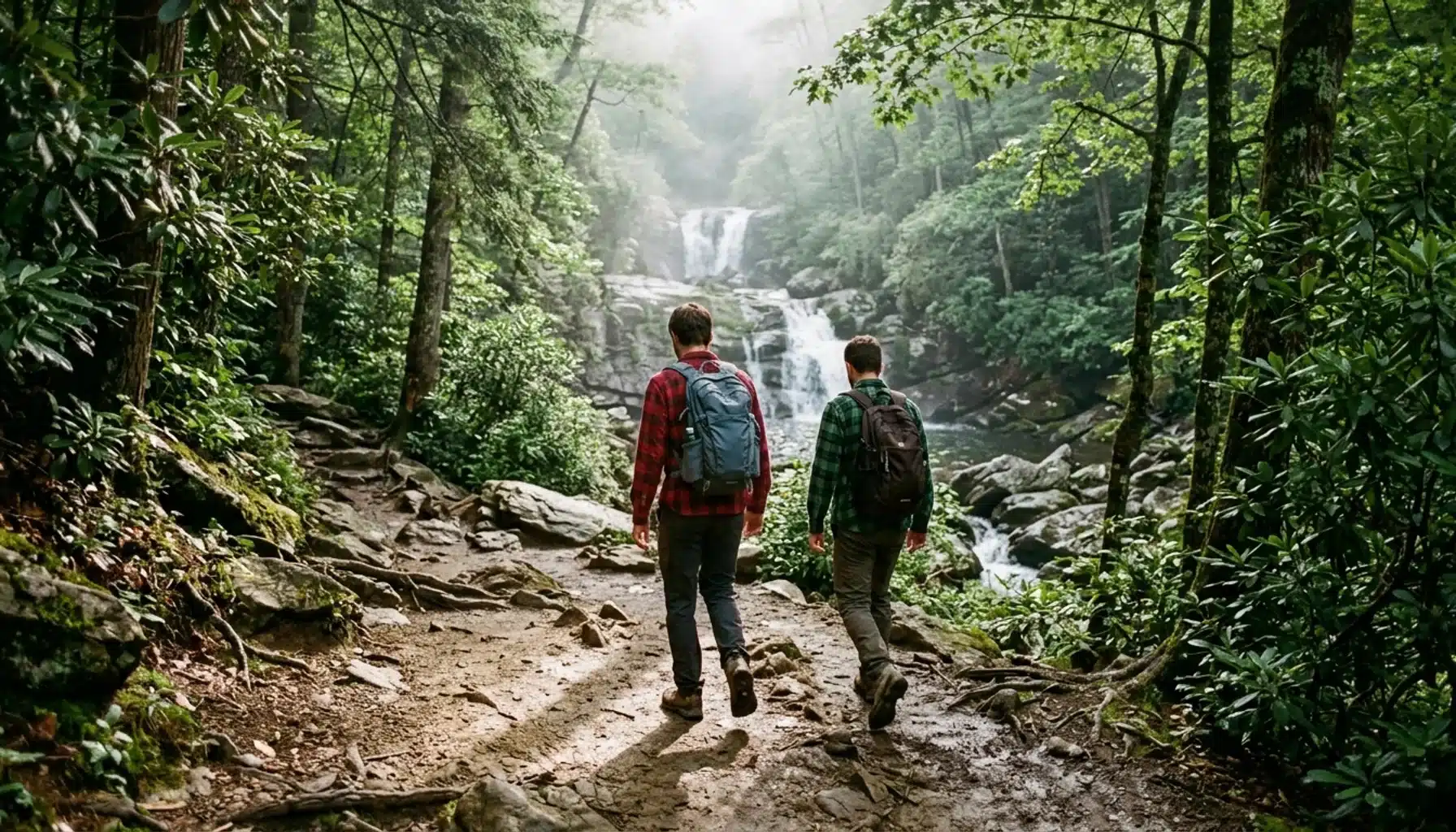
Three days is enough time for a well-planned Gatlinburg itinerary that covers one moderate hike, one easy family trail, a full afternoon downtown, and at least four sit-down meals worth the calories. The trick is sequencing hiking days around weather and crowds, not the other way around. We built this plan from Summit View Lodge, so the drive times below come from our own mornings on the road.
Key Takeaways
- A 3 day Gatlinburg itinerary typically works best as one hiking-heavy day, one downtown-and-food day, and one flexible day split between a second trail and Pigeon Forge or Ober Gatlinburg.
- Great Smoky Mountains National Park is the most-visited national park in the country, and it draws more than 11 million visitors in a typical recent year, so expect full trailhead lots on weekends.
- Laurel Falls (2.6 miles round trip, paved) and Grotto Falls (2.6 miles round trip, walk behind the waterfall) are the two most realistic family-friendly hikes to anchor a short trip.
- Sevier County, home to Gatlinburg, Pigeon Forge, and Sevierville, is a heavy-visitation region, so expect crowds at peak-season restaurants and trailheads.
- October is one of Gatlinburg’s highest-demand months for lodging, so book cabins early if you’re visiting during fall foliage.
- Basing your stay in Chalet Village North, about 3 miles from downtown Gatlinburg and 4 miles from the national park entrance, cuts drive time on hiking mornings without sacrificing restaurant access in the evening.
If you’ve searched “3 days in Gatlinburg” and found ten different itineraries that all recommend the same six attractions in a different order, you’re not alone. Most guides pack in Ripley’s, Ober Gatlinburg, Dollywood, and three hikes into 72 hours without acknowledging that drive times, parking, and trail crowds will blow up that plan by lunch on day one.
This itinerary is built differently. It separates hiking days from downtown days on purpose, because squeezing a moderate trail and a full evening of Parkway shopping into the same afternoon usually means rushing both. It uses real trail mileage, actual restaurant names, and honest notes on when Gatlinburg gets uncomfortably crowded, so you can adjust for the season you’re visiting in 2026.
We wrote this from Chalet Village North, a neighborhood of cabins on the ridge above town where Summit View Lodge sits about 3 miles from downtown Gatlinburg and roughly 4 miles from the national park entrance. That proximity shapes the timing advice below, especially on hiking days when reaching a trailhead before the parking lot fills matters more than anything else.
How Many Days Is Enough for Gatlinburg?
Three days is enough for Gatlinburg if your goal is one solid hike, a full day downtown, and a half day for either a second trail or a day trip to Pigeon Forge. Three days is not enough if you’re also trying to fit in Dollywood, Cades Cove, and multiple hikes without feeling rushed.
Two days works for a quick downtown-and-one-hike trip, but you’ll skip Cades Cove entirely since the 11-mile scenic loop alone takes 1.5 to 2 hours without stopping. Five to seven days lets you add Cades Cove, a Mt. LeConte summit attempt, and a full Pigeon Forge day without compressing anything.
For most travelers driving in from Knoxville, Nashville, Atlanta, or the Carolinas for a long weekend, three days hits the sweet spot: enough time to relax at the cabin in the evenings instead of collapsing into bed after a 14-hour sightseeing marathon. It’s realistic.
What Is the Number One Thing to Do in Gatlinburg?
The single highest-value activity in a Gatlinburg itinerary is hiking inside Great Smoky Mountains National Park, specifically a waterfall trail like Grotto Falls or Laurel Falls, because it delivers the mountain scenery Gatlinburg is known for without requiring a full-day commitment. The park is the reason most people come, and a 2.6-mile waterfall hike gives you the best payoff per hour of any option in town.
Grotto Falls is a 2.6-mile round trip trail and the only hike in the park where you can walk behind the waterfall, a detail that makes it stand out even among the Smokies’ many cascades. Start early, ideally before 9 a.m., since the Roaring Fork Motor Nature Trail access road and small trailhead lot fill up by mid-morning on weekends.
Laurel Falls is the more accessible option: 2.6 miles round trip on a paved trail, which makes it manageable for strollers, older visitors, or anyone who wants a shorter, flatter walk. It is also one of the most popular trails in the entire park, so expect a packed parking lot by 10 a.m. from spring through fall.
Both trails sit within a 20 to 30 minute drive of most Gatlinburg lodging. If downtown shopping and Parkway attractions matter more to you than trail mileage, that’s a valid choice too, but skipping the park entirely means missing the reason millions of people visit each year.
Day 1: Hiking and Mountain Views
Day one of this Gatlinburg itinerary is built around the national park, since morning light and empty parking lots make it the best time to hike before the crowds arrive. Doing the hardest physical day first also gives your legs the rest of the trip to recover.
Morning: Trailhead Before 9 A.M.
Grab breakfast at Pancake Pantry, open since 1960 and still the most requested breakfast stop in downtown Gatlinburg. Arrive before 8 a.m. if you want to skip the line that regularly wraps around the block by mid-morning, especially in summer and October. Order the sweet potato pancakes.
From there, drive roughly 20 minutes to the Grotto Falls trailhead via the Roaring Fork Motor Nature Trail, a one-way loop road that’s closed in winter, so check conditions if visiting between December and March. Budget 2 to 2.5 hours round trip for the 2.6-mile hike, including time to stand behind the waterfall and take photos.
Afternoon: Recovery and a Quiet Lunch
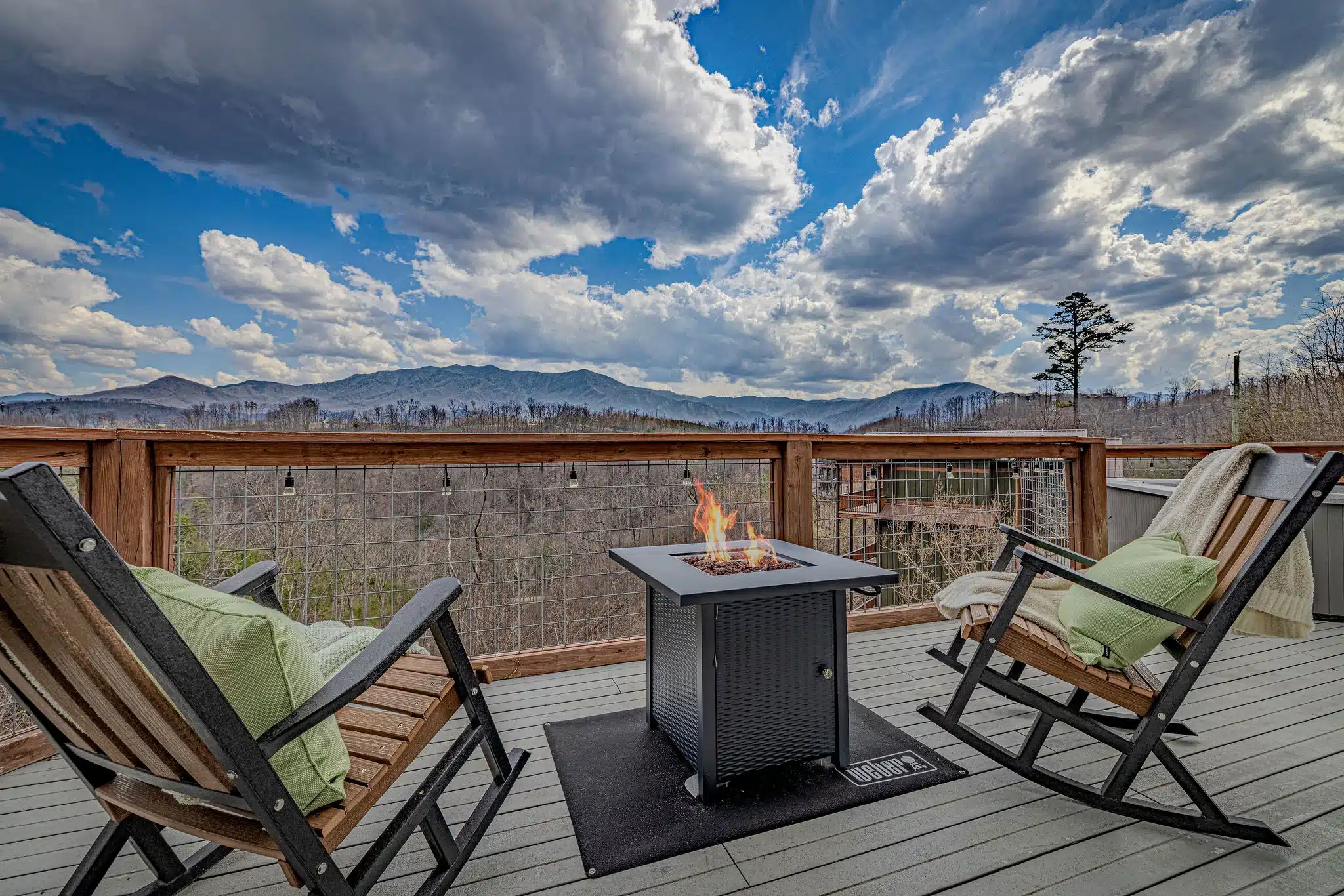
Skip a big sit-down lunch after a morning hike. Grab a sandwich or barbecue plate and save your appetite for dinner. This is also the right afternoon to head back to the cabin, shower off trail dust, and use the hot tub if you’re staying somewhere with one. At Summit View Lodge, the private hot tub on the view deck faces Mt. LeConte directly, a good spot to sit for 20 minutes after a 2.6-mile trail.
Evening: Dinner With a View
For dinner, consider a restaurant with mountain views rather than another downtown crowd. This is also a good night to grill at the cabin instead, since most rentals in Chalet Village, including this one, come with a gas grill and outdoor dining space. Falling asleep after day one should feel earned, not exhausting.
What Are the Four Worst Times to Visit Gatlinburg?
The four worst times to visit Gatlinburg for a balanced itinerary are peak fall foliage weekends in mid-to-late October, the week between Christmas and New Year’s, spring break weeks in March, and any major holiday weekend from Memorial Day through Labor Day. Each combines high lodging demand with crowded trails and restaurants.
October is one of Gatlinburg’s highest-occupancy months, driven largely by fall foliage tourism, and July runs close behind on summer family travel and the national park’s peak visitor season.
If you want a quieter trail experience, target a weekday visit in late spring (May, before Memorial Day) or early winter (early December, before Christmas week). January and February are the lowest-demand months, which means better lodging rates but also a closed Roaring Fork Motor Nature Trail and some icy or muddy trail sections.
None of this means you should avoid October. The foliage is worth seeing; just build in extra time for parking and reservations, and expect Pancake Pantry’s line to be longer than usual.
Day 2: Downtown Gatlinburg and Food
Day two shifts to downtown Gatlinburg, giving your legs a break from hiking while you fill the day with Parkway shops, aerial attractions, and restaurants. This is the day to walk, browse, and eat without schedule pressure.
Morning: The Gatlinburg SkyBridge and Parkway
Start at the Gatlinburg SkyBridge and SkyLift Park, a 680-foot pedestrian bridge suspended 140 feet above the valley floor, the longest pedestrian suspension bridge in North America. Budget 1.5 to 2 hours for the SkyLift ride up, the bridge walk, and the overlook area. Go early, by 10 a.m., before Parkway foot traffic peaks.
Afterward, walk the Parkway itself. It’s touristy, and it knows it, taffy shops and novelty stores included, but that’s part of Gatlinburg’s identity. For lunch, Big Daddy’s Pizzeria is a reliable, no-fuss stop that handles groups well.
Afternoon: Ripley’s or a Rain Backup
Ripley’s Aquarium of the Smokies is the default rainy-day pick: the penguin parade runs daily at 1:15 p.m., and the shark tunnel is well done for a mid-size city aquarium. If the weather’s clear and you’d rather stay outside, the Gatlinburg Space Needle, a 400-foot observation tower, offers a faster alternative with panoramic views in under an hour.
Evening: Dinner and Live Music Downtown
For dinner, downtown Gatlinburg has more range than its reputation suggests. If you want a laid-back stop with live bluegrass and free tastings, Ole Smoky Moonshine near the Parkway is worth an hour even if you don’t plan to drink. It feels distinctly Appalachian rather than generic tourist-strip. Check our guide to Gatlinburg’s best restaurants for picks that handle bigger groups and pickier eaters without a two-hour wait.
Is 3 Days in Gatlinburg Worth It?
Three days in Gatlinburg is worth it if you want a mix of hiking, downtown browsing, and one flexible day, rather than trying to see every attraction in the Smokies in a single trip. It’s the shortest window that lets you experience the national park properly instead of just driving past it.
Compare that to a two-day trip, where you’d fit in one hike and one downtown afternoon, with no room for a day trip or a second trail. A three-day itinerary gives you a buffer day for weather delays, since Smoky Mountains weather can shift fast, or for adding Pigeon Forge if the group wants it.
The downside: three days is not enough time to add Dollywood, Cades Cove, and a Mt. LeConte summit attempt without sacrificing sleep. If those are non-negotiable, plan for five days minimum. For a first-time visit focused on hiking, food, and downtown, three days delivers a complete trip without feeling like a checklist.
Day 3: Flex Day, Second Trail or Pigeon Forge
Day three should stay flexible, built around either a second, easier hike near your cabin or a half-day trip to Pigeon Forge, depending on how your legs and the forecast look. This is the day most rigid itineraries get wrong by overplanning it.
Option A: A Second, Easier Trail
If day one’s hike went well and you want more park time, Laurel Falls is the natural second choice: 2.6 miles round trip, paved, and less strenuous than Grotto Falls. Go before 9 a.m. to beat the parking crunch. If you’d rather drive a scenic loop than walk, the Cades Cove 11-mile loop takes 1.5 to 2 hours without stops, longer with wildlife-viewing traffic jams, which happen often enough that locals plan around them.
Option B: Pigeon Forge and The Island
Pigeon Forge sits about 10 miles from Gatlinburg-area cabins, and The Island in Pigeon Forge, home to over 80 shops and restaurants plus The Great Smoky Mountain Wheel (a 200-foot observation wheel), makes for a solid half-day trip. The Old Mill Restaurant, a historic mill-turned-eatery, is a reliable lunch stop if you want more character than a food court. Dollywood, about 12 miles from Chalet Village, opens at 10 a.m.; if you go, head to the back of the park first, since crowds thin out fastest there.
Whichever option you pick, use the Gatlinburg trolley system to cut down on parking headaches. It connects downtown Gatlinburg with Pigeon Forge and Sevierville, and riding it instead of driving during peak afternoon hours saves time when Parkway traffic backs up.
How Should You Adapt This Itinerary for Weather or Season?
Adapting a Gatlinburg itinerary for weather means having a rain-day swap ready (Ripley’s Aquarium or the Space Needle instead of a trail) and knowing that the Roaring Fork Motor Nature Trail closes seasonally, typically in winter, which affects access to Grotto Falls.
In summer (June through August), start hikes by 7:30 or 8 a.m. to beat both heat and crowds; July is among the busiest months, so trailheads and restaurants fill fast. In fall, especially October, foliage is worth planning around, but expect heavy lodging demand and book cabins and dinner reservations well in advance.
Winter visits mean checking road conditions before driving up to Chalet Village or similar ridge neighborhoods; AWD or 4WD is useful on snow-dusted mountain roads, even though most, including the route to Summit View Lodge, are paved and relatively easy compared to steeper cabin communities. Spring brings pollen, which matters for allergy-sensitive travelers, along with muddy trail sections after rain, so pack hiking shoes, not sneakers.
What Should You Prioritize When Planning a Gatlinburg Trip?
Prioritize booking your cabin and any must-do dinner reservations first, since Gatlinburg’s lodging and popular restaurants fill up fastest during peak months, then build hiking days around morning trailhead arrivals rather than afternoon convenience.
- Book lodging 4 to 8 weeks out for summer or October trips; last-minute bookings are possible but limit your cabin choices significantly.
- Pick one hard hike and one easy hike, not two hard ones, so your group doesn’t burn out by day two.
- Reserve one “flex” evening for a spontaneous restaurant find or a quiet night at the cabin instead of scheduling every meal.
- Check the Roaring Fork Motor Nature Trail status before a Grotto Falls trip if visiting between late November and April.
- Confirm parking logistics at your cabin. Many Gatlinburg-area rentals only offer space for one or two vehicles, which matters for groups arriving in separate cars.
Common mistakes include scheduling a hike and a full downtown afternoon on the same day, underestimating drive time on winding mountain roads, and assuming Cades Cove is a quick 30-minute stop when it’s a half-day commitment with wildlife traffic. For a deeper look at trail options beyond these two, our guide to the best hikes near Gatlinburg ranks ten trails by difficulty and view quality.
Is Hiking in the Smokies Safe for Everyone?
Hiking near Gatlinburg is generally safe for most fitness levels if you pick the right trail, but a few considerations apply before you go, especially for families, older travelers, or anyone unfamiliar with mountain terrain.
Physical Fitness Level: Laurel Falls and Grotto Falls are both rated easy to moderate at 2.6 miles round trip, manageable for most kids over five and reasonably fit adults. Steeper trails toward Mt. LeConte require real hiking experience and are not a good fit for first-timers or anyone with knee or heart concerns without checking with a doctor first.
Weather Risks: Smoky Mountains weather changes fast. Afternoon thunderstorms are common in summer, and temperatures at higher elevations can run 10 to 20 degrees cooler than in Gatlinburg itself. Check the forecast the morning of your hike, not the night before.
Wildlife Awareness: Black bears are active throughout the park. If you see one, stay at least 50 yards back, never approach for photos, and store food properly. Most encounters end uneventfully if you give the animal space and don’t run.
Footwear and Terrain: Even paved trails like Laurel Falls have uneven, slick sections near waterfalls. Wear hiking shoes, not sandals, especially after rain.
Where Should You Stay for This Itinerary?
The best base for a hiking-and-downtown Gatlinburg itinerary is a cabin close enough to the park entrance to make early trailhead starts realistic, but close enough to downtown that evening dinners don’t require a 30-minute drive each way. Chalet Village North, on the ridge above town, fits both requirements.
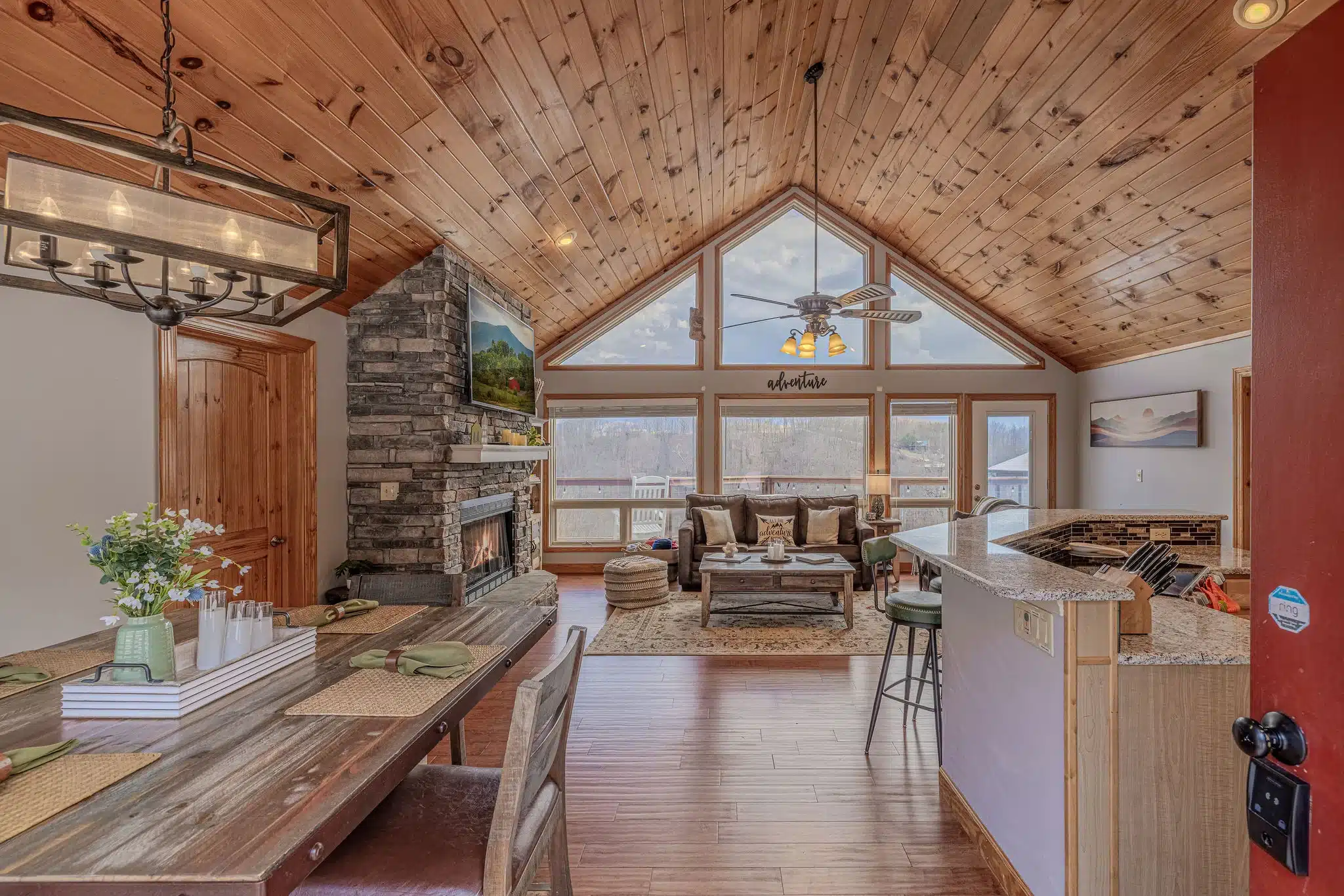
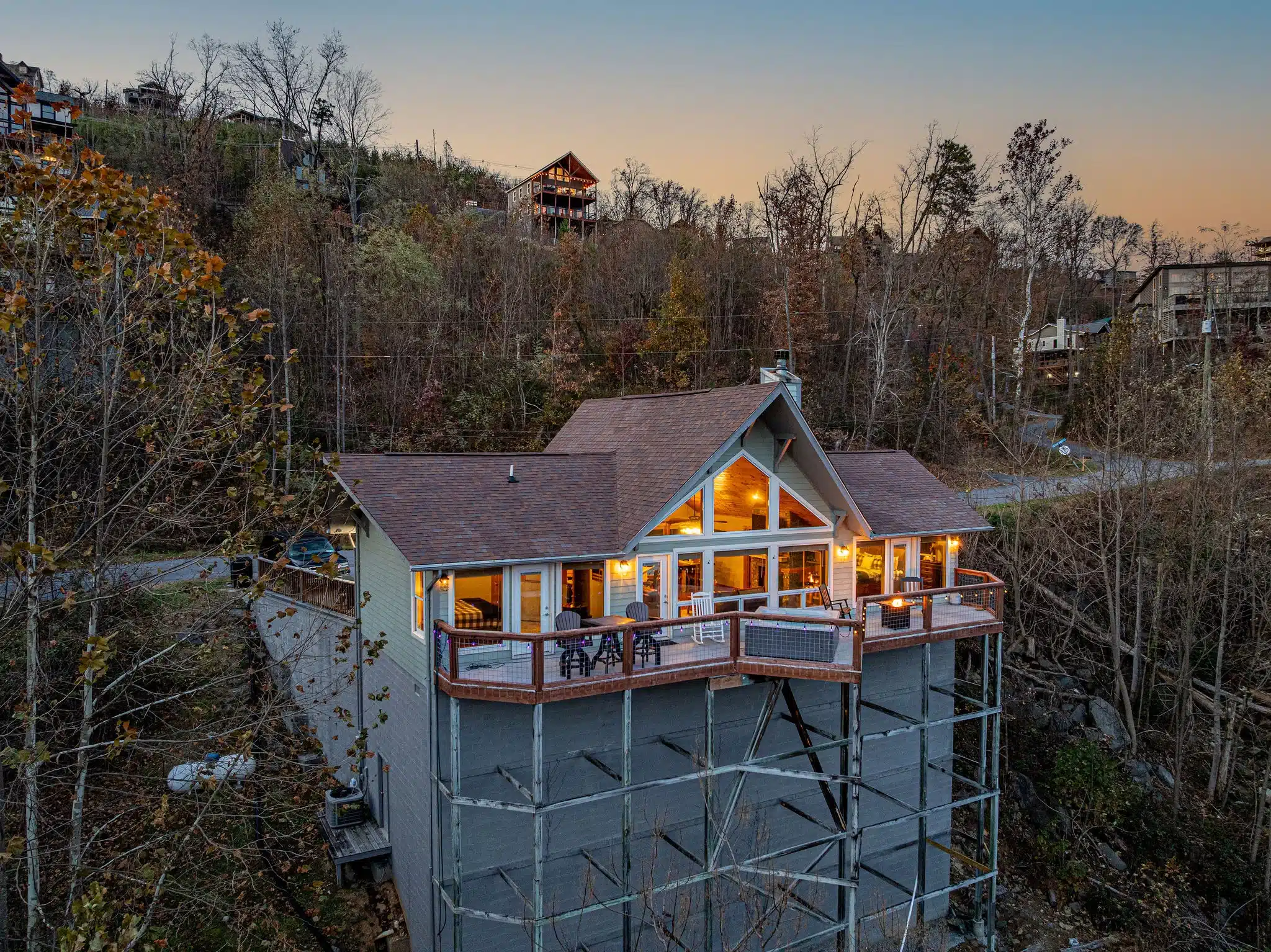
Summit View Lodge sits about 3 miles from downtown Gatlinburg and roughly 4 miles from the national park entrance, close enough that day one’s Grotto Falls trailhead run and day two’s SkyBridge trip both stay under a 20-minute drive. The cabin sleeps up to 5 guests across two king ensuite bedrooms plus a sleeper sofa, a good fit for a couple, a small family, or two couples sharing the trip.
After a hiking day, the private hot tub and fire pit on the view deck face Mt. LeConte directly, a useful recovery spot rather than just a listing photo feature. The cabin also sits about 0.7 miles from Ober Gatlinburg, handy for a low-effort mountain activity on your flex day, and roughly 10 miles from Pigeon Forge and 12 from Dollywood if day three heads that direction.
If you’re weighing whether to book direct or through a third-party platform, our guide to booking direct versus Airbnb breaks down the differences in flexibility and communication. For a broader look at neighborhoods beyond Chalet Village, see our guide to where to stay in Gatlinburg.
Frequently Asked Questions
How many miles will I drive on a 3 day Gatlinburg itinerary?
Expect roughly 60 to 90 miles total across three days if you combine one park hike, a downtown day, and a Pigeon Forge trip, most of it in short 10 to 20 minute segments rather than long highway stretches.
Do I need reservations for restaurants like Pancake Pantry?
Pancake Pantry doesn’t take reservations, so arriving before 8 a.m. is the most reliable way to avoid a long wait, especially during summer and October when lines regularly stretch around the block.
Is Cades Cove worth adding to a 3 day itinerary?
Cades Cove is worth it if you have a flexible day three, since the 11-mile loop takes 1.5 to 2 hours minimum, but it will likely replace either a second hike or a Pigeon Forge trip rather than fitting alongside both.
What’s the best neighborhood to stay in for a hiking-focused Gatlinburg trip?
Chalet Village North is a strong option for hiking-focused trips because it sits close to both the national park entrance and downtown Gatlinburg, cutting drive time on early trailhead mornings without sacrificing evening restaurant access.
Can I do this itinerary with young kids?
Yes, with adjustments: swap Grotto Falls for Laurel Falls since it’s paved and shorter for strollers, and plan for a slower pace overall, since most 2.6-mile trails take longer with young children than the standard 2 to 2.5 hour estimate.
What should I do if it rains for most of my trip?
Shift outdoor days to Ripley’s Aquarium of the Smokies, the Gatlinburg Space Needle, or downtown Parkway shopping, and save hiking for whichever day has the clearest forecast, since Smoky Mountains trails can get slick and less enjoyable in heavy rain.
Is it cheaper to book a Gatlinburg cabin directly or through an OTA?
Booking direct often means more transparent pricing without third-party service fees layered on top, along with more flexible communication about check-in times, though exact savings vary by property and season, so compare total costs before booking either way.
Conclusion: Building Your 2026 Gatlinburg Itinerary
A well-balanced 3 day Gatlinburg itinerary comes down to sequencing: hike first while you’re fresh, spend day two downtown without a stopwatch, and keep day three flexible for whatever the weather or your energy level demands. With millions of visitors flowing through Great Smoky Mountains National Park each year, the biggest advantage you can build into any trip is timing: early trailhead starts, off-peak dining, and a home base that doesn’t add drive time to either.
Whether you stick to this exact structure or swap in Cades Cove for a second hike, the fundamentals hold: one hard day, one easy day, one flexible day. That’s the itinerary that survives contact with Smoky Mountains weather and Parkway traffic.
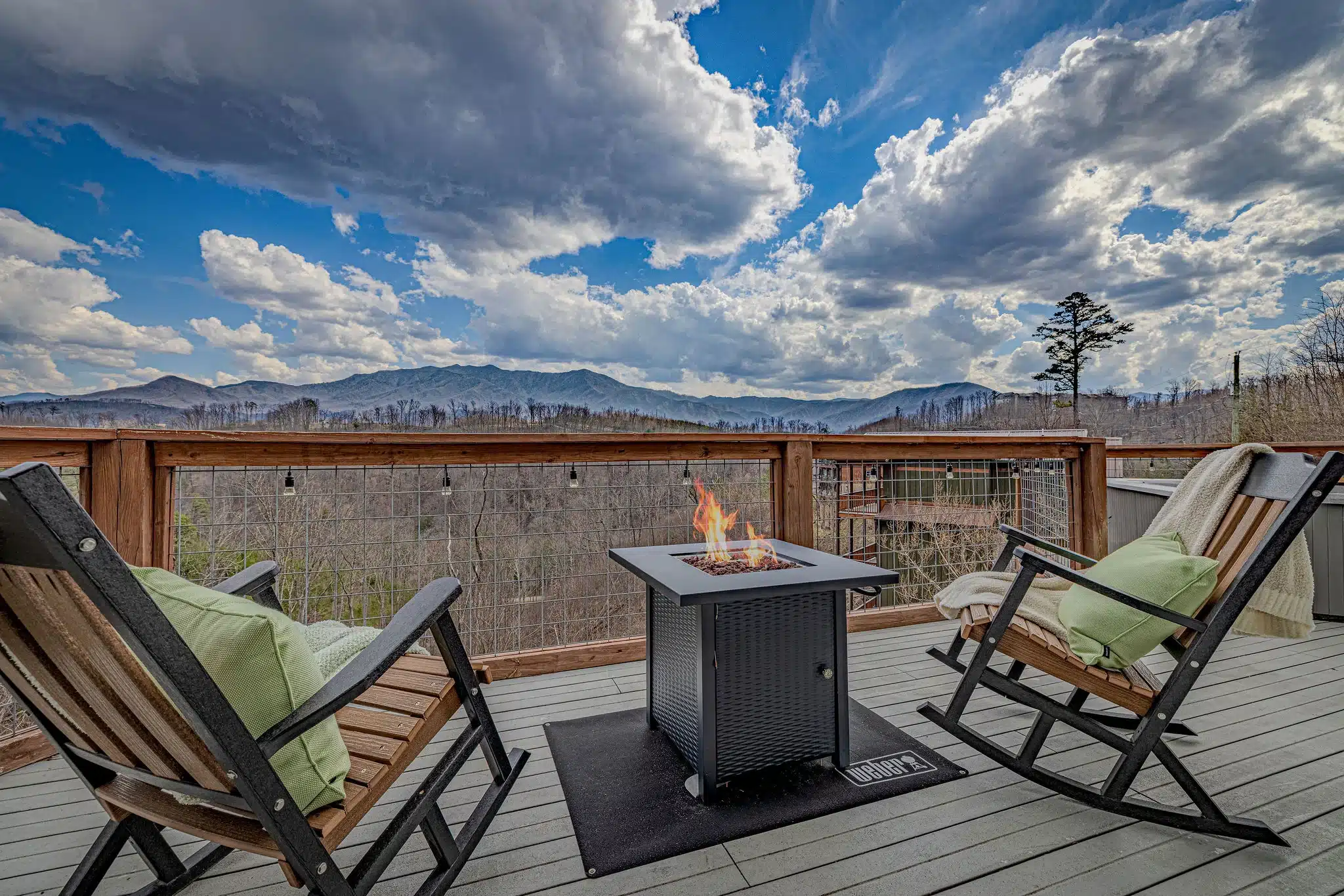
If this itinerary has you sold on a hiking-first trip, Summit View Lodge puts you about 4 miles from the park entrance and 3 miles from downtown, close enough to run both without wasting your mornings on the road. The fire pit and hot tub on the deck are a good way to end day one after Grotto Falls. Check availability here.