
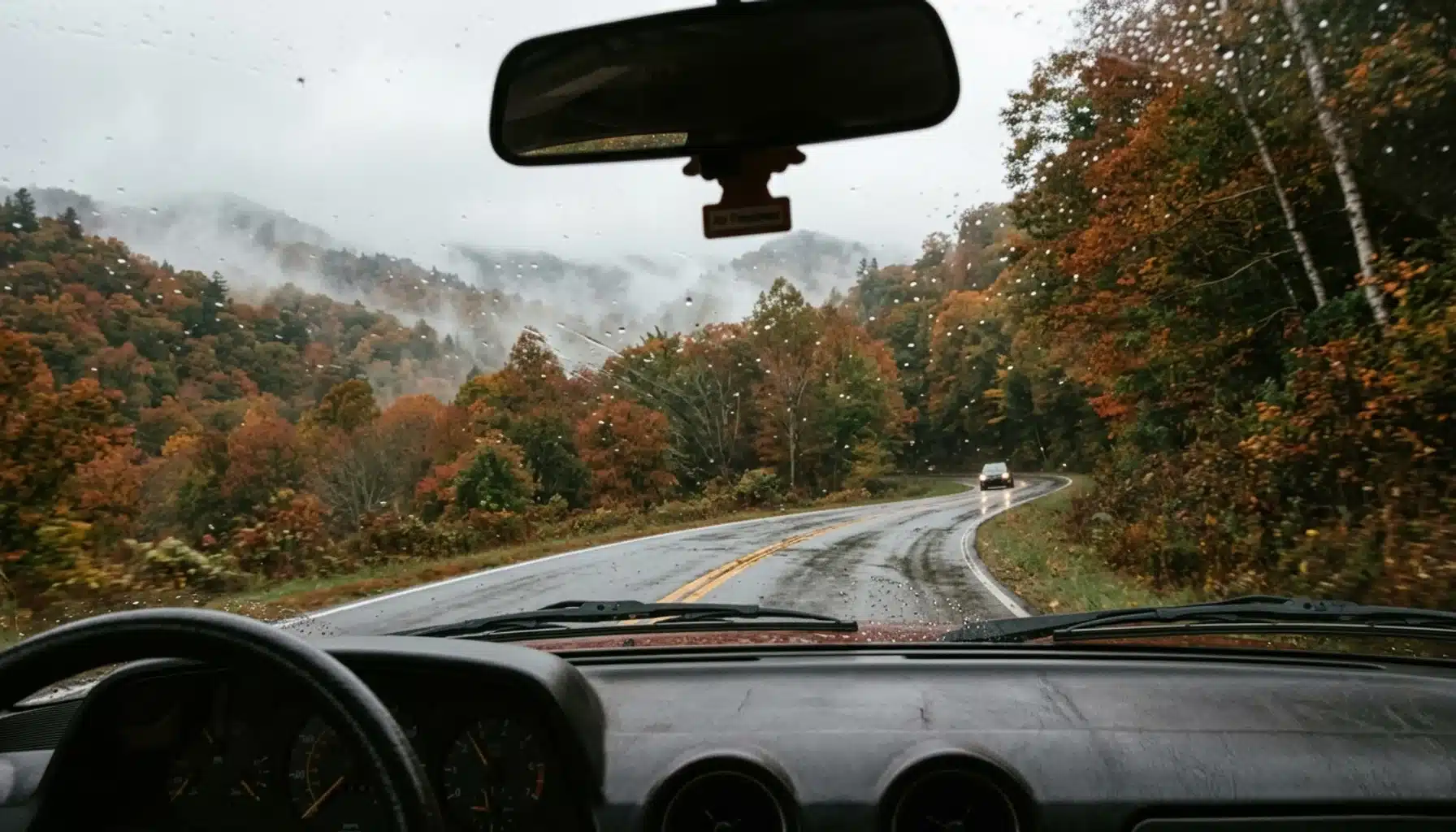
The best scenic drives near Gatlinburg are Newfound Gap Road for cross-park mountain views, the 5.5-mile Roaring Fork Motor Nature Trail for waterfalls and old homesteads, and the 11-mile Cades Cove Loop for wildlife. From Summit View Lodge, 4 miles from the park entrance, all three are an easy morning start.
Key Takeaways
- Newfound Gap Road runs roughly 31 to 33 miles from Gatlinburg to Cherokee, North Carolina, and takes about one hour without stops, depending on the source you check.
- Roaring Fork Motor Nature Trail is a narrow, one-way 5.5-mile loop that generally opens mid-April through late November; buses, RVs, and trailers are not allowed.
- Cades Cove Loop is 11 miles and goes vehicle-free on Wednesdays in spring and summer, so Wednesday is the day to avoid it by car.
- Foothills Parkway has three segments (5.6, 14.75, and 16.6 miles one way), which makes it the best choice for a less crowded drive.
- Always check the National Park Service seasonal road page before you leave, because openings shift with weather.
- Summit View Lodge sits 3 miles from downtown Gatlinburg and 4 miles from the park entrance, which shortens the start of every drive below.
Why Plan Around Drives Instead of Trailheads in 2026?
A scenic drive in Great Smoky Mountains National Park is a paved road, often narrow and slow, that delivers overlooks, waterfalls, and wildlife from the driver’s seat. According to the National Park Service, the park received approximately 12.2 million visitors in 2026, so you share the roads with a lot of people. Picking the right route and hour matters more than picking the “best” one.
At Summit View Lodge we host guests who arrive with a long trail list and leave talking about a road. Drives work for toddlers and grandparents alike, and for anyone with sore knees after a hike. They also fit the weekend schedule if you’re coming from Knoxville or Atlanta.
This guide sorts six routes by what they deliver, then adds the logistics competitors skip: one-way versus round-trip mileage, vehicle limits, closure checks, and the crowd patterns that decide whether a drive feels scenic or like a parking lot.
1. Newfound Gap Road: The Cross-Park Drive to Cherokee
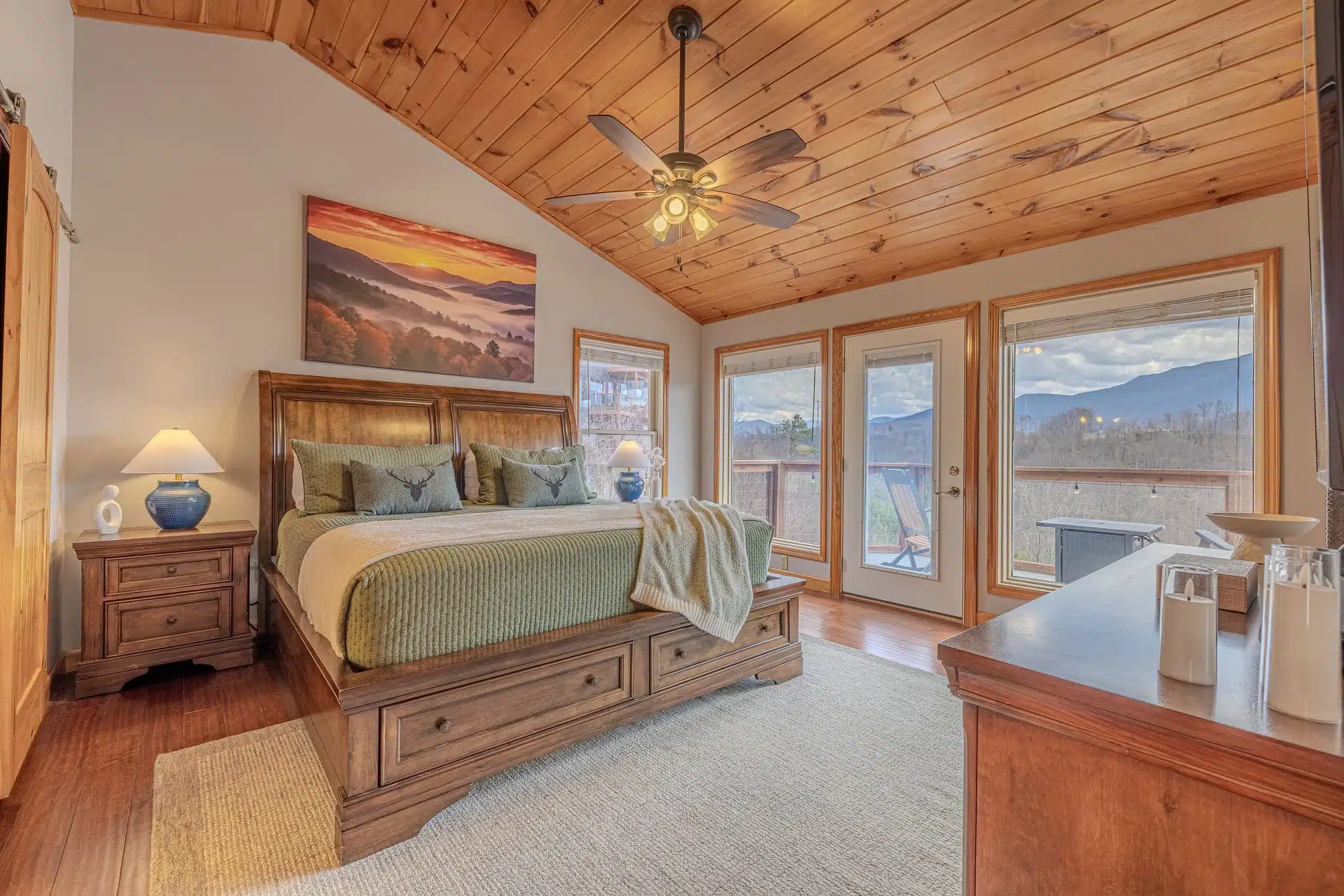
Newfound Gap Road is the main paved route across Great Smoky Mountains National Park, connecting Gatlinburg, Tennessee, with Cherokee, North Carolina. One guide lists it at 31 miles and another at 33, so treat it as roughly 31 to 33 miles one way. It climbs to Newfound Gap at 5,048 feet, and you should budget about one hour from Gatlinburg to Cherokee without stops.
Start at Sugarlands Visitor Center, where you can grab a map and check conditions. Past it, the road reaches Newfound Gap, the turn for Kuwohi, the Oconaluftee Valley, and Mingus Mill on the North Carolina side. Check the official Newfound Gap Road page before you go.
Our take: drive it early, and expect the top to feel noticeably cooler than town, so pack a layer. Fall color weekends bring slow traffic and full pull-offs. If you want sunset photos at Newfound Gap, as some tourism sites suggest, plan for the descent in fading light on a winding road.
From Summit View Lodge, the park entrance is 4 miles away, so you can be on this road within minutes of leaving the cabin.
2. Roaring Fork Motor Nature Trail: Waterfalls and Old Farmsteads
Roaring Fork Motor Nature Trail is a 5.5-mile, narrow, winding, one-way loop road through old-growth forest and historic mountain homesites. It is the shortest of the major drives, which makes it the best option when your time is limited. The National Park Service describes it as a one-way route, and distance here means the full loop.
To find it, turn off the Gatlinburg parkway at traffic light 8 and follow Historic Nature Trail Road to the Cherokee Orchard entrance. You will pass the Rainbow Falls trailhead; the NPS says to take the one-way road on the right. Before the loop starts, the Noah “Bud” Ogle Self-Guiding Nature Trail offers a short walk through a mountain farmstead and hardwood forest.
About two miles into the drive, the Trillium Gap trailhead leads to Grotto Falls, the only waterfall in the Smokies where you can walk behind the curtain of water. Rainbow Falls, an 80-foot drop, is a 5.4-mile round trip that the NPS calls moderately strenuous. Skip it if you wanted a drive; the Place of a Thousand Drips pull-off is the low-effort waterfall.
Practical caveats matter here. The road generally opens mid-April through late November, weather permitting. Parking at trailheads and pull-offs is limited and cell service is spotty. Buses, RVs, and trailers are prohibited. Confirm details on the National Park Service Roaring Fork Motor Nature Trail page.
3. Cades Cove Loop Road: The Wildlife Drive
Cades Cove Loop Road is an 11-mile one-way loop through a broad valley with historic buildings and wildlife such as deer and black bears. It is the park’s best-known drive and, in busy months, its slowest. Allow two to four hours for the loop depending on traffic and how many stops you make, and expect the trip from Gatlinburg to the loop entrance to take well over an hour.
Gatlinburg’s tourism office notes that Cades Cove is vehicle-free on Wednesdays in spring and summer, when walkers and cyclists have the loop. That is the single most useful detail for planning. If you want to drive it, pick any other day, and arrive near opening to avoid the stop-and-go line that builds when someone spots a bear.
Honest assessment: Cades Cove rewards patience. If your group has little of it, or kids who need a lunch stop every ninety minutes, drive Roaring Fork instead. Check access rules on the official Cades Cove Loop Road page. Bring snacks and fill your tank in Gatlinburg beforehand.
4. Kuwohi Road: The High-Elevation Drive
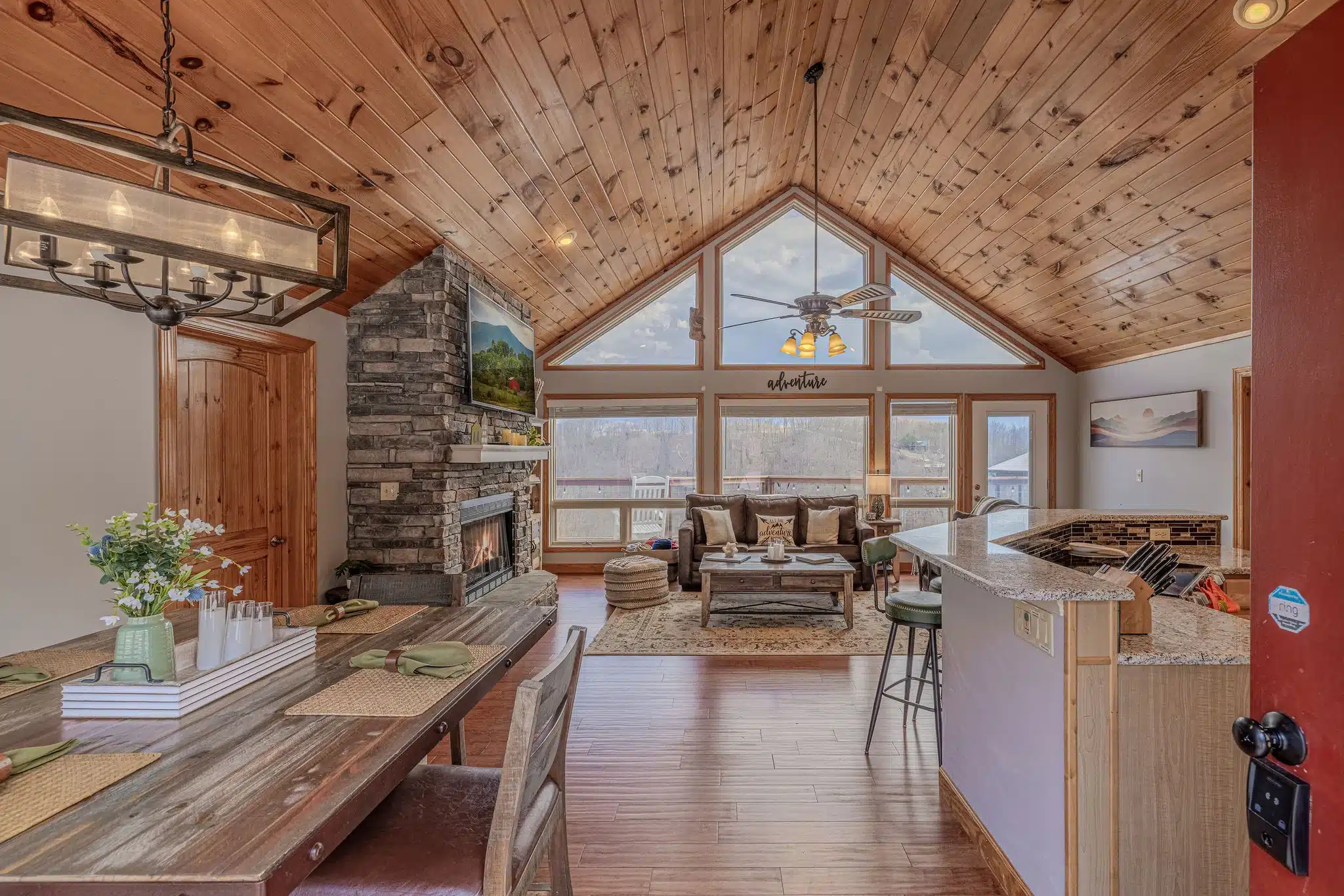
Kuwohi, formerly known as Clingmans Dome, is the park’s highest point, reached by a spur road that branches off Newfound Gap Road near the state line. The drive climbs through spruce-fir forest where temperatures drop well below those in town. The Kuwohi (formerly Clingmans Dome) page has current details, and the access road is seasonal.
If you searched for how far it is from Gatlinburg, plan on roughly an hour or a bit more each way, since the trip combines part of Newfound Gap Road with the spur. Treat that as a planning range rather than an exact figure, then add time for parking, which fills fast on clear weekends.
Check the seasonal road status before you leave. Cold-weather closures are common at this elevation, and the gate can shut with little notice. Dress as though it is 15 degrees cooler than the cabin deck, and go on a weekday if you can. The best pairing is a morning on Newfound Gap Road with the spur as your last stop, so you finish at the highest point while the light is clear.
5. Foothills Parkway: The Quiet Alternative
Foothills Parkway is a scenic road along the park’s northern edge, built in segments with long-range views over the Tennessee foothills. The NPS lists three sections: Cosby to I-40 at 5.6 miles one way, Walland to Wears Valley at 14.75 miles one way, and Chilhowee to Walland at 16.6 miles one way. These are one-way figures, so double them for a round trip.
This is the pick if you dislike the Cades Cove line. The Wears Valley end is on the Pigeon Forge side of the mountains, which also answers the common question about a scenic route to Pigeon Forge: the main parkway is the direct way, but this is the one with views. Pigeon Forge sits 10 miles from Summit View Lodge by the direct route, and Dollywood is 12 miles away.
Check which segment is open before you commit, because construction and weather can affect the road. Pull-offs here are less crowded than in the park interior, which makes this a good late-afternoon drive when you want a long view without a visitor-center crowd.
6. Little River Road: The Creekside Connector
Little River Road follows the Little River from the Sugarlands area and links to Cades Cove, Elkmont, and Tremont. It is less a destination than a connector, but a pretty one, with the river running beside the pavement and rhododendron thickets lining the road. Its biggest advantage is that it makes a loop day possible.
A practical combination: take Little River Road toward Cades Cove in the morning, drive the loop, then return the way you came with stops at Elkmont or Tremont. Elkmont is the better of the two stops if you only have time for one, since it has a historic district you can walk through. Expect traffic on summer and fall weekends, and plan restroom stops in advance since pull-offs vary in facilities.
For one more option, NPS also lists Lakeview Drive as an 11.4-mile round trip alternative. Check the park’s driving information before you commit, since access and conditions change.
How Do You Choose Among Scenic Drives Near Gatlinburg?
The right drive depends on your time, your passengers, and the season. Use the table below, and note that mileages are the figures reported by the National Park Service and tourism pages cited above, with one-way and loop distances kept separate.
| Route | Distance | Time needed | Best for |
|---|---|---|---|
| Roaring Fork Motor Nature Trail | 5.5-mile one-way loop | Short, but stops add up | Waterfalls on a tight schedule |
| Newfound Gap Road | About 31 to 33 miles one way | About an hour to Cherokee without stops | Big mountain views |
| Cades Cove Loop Road | 11-mile loop | Several hours when busy | Wildlife and history |
| Foothills Parkway | 5.6, 14.75, or 16.6 miles one way by segment | Varies by segment | Fewer crowds |
| Kuwohi Road | Spur off Newfound Gap Road | Half day with the drive in | Highest-elevation views |
For a half-day, drive Roaring Fork and add a short walk to Grotto Falls. For a full day, combine Newfound Gap Road with the Kuwohi spur. For a family with toddlers, Roaring Fork wins because the loop is short and exits are frequent.
Crowds follow a pattern. Weekday mornings are calmest everywhere, while weekends and fall color weeks pack Newfound Gap Road and Cades Cove. Arriving before most visitors finish breakfast is the cheapest way to improve any drive.
Which Drives Work for Large Vehicles, Grandparents, or Visitors Who Do Not Hike?
A vehicle-fit check means confirming that your car, trailer, or group can actually use a road before you drive to it. Roaring Fork bans buses, RVs, trailers, and motor homes, so rental vans and large SUVs towing anything will need a different plan. Newfound Gap Road and Foothills Parkway are the broader choices for most passenger vehicles.
If you can’t hike, Newfound Gap Road delivers the most scenery per minute because overlooks sit close to the pavement. Cades Cove works well too, since you can watch wildlife from the car. Roaring Fork has pull-offs but limited parking, so if you need a close space, go on a weekday.
Multi-generational groups appreciate that Summit View Lodge is a single-level cabin with no interior stairs, which makes the end of a long drive easier. No campers or trailers are permitted in the Chalet Village neighborhood, so leave those at home.
How Do You Check Closures, Reservations, and Road Conditions Before Leaving?
Road status is information you verify on the day you drive, not the week before. The NPS maintains a seasonal road status page listing openings and closures. Gatlinburg’s tourism page says Roaring Fork generally opens mid-April through late November, but that is a pattern, not a promise.
As for reservations, these roads are generally open to passenger vehicles without a timed-entry booking, but park rules, parking requirements, and fees can change. Confirm the current parking rules on the park’s site before you go. Fill your tank, download offline maps, and tell someone your route, since cell service is limited on parts of Roaring Fork.
For winter trips, the cabin’s own road is paved and easy, but we recommend AWD or 4WD when snow is forecast. Our guide to things to do in Gatlinburg covers backup plans for days when a road closes.
Where Should You Stay for Easy Starts on These Drives?
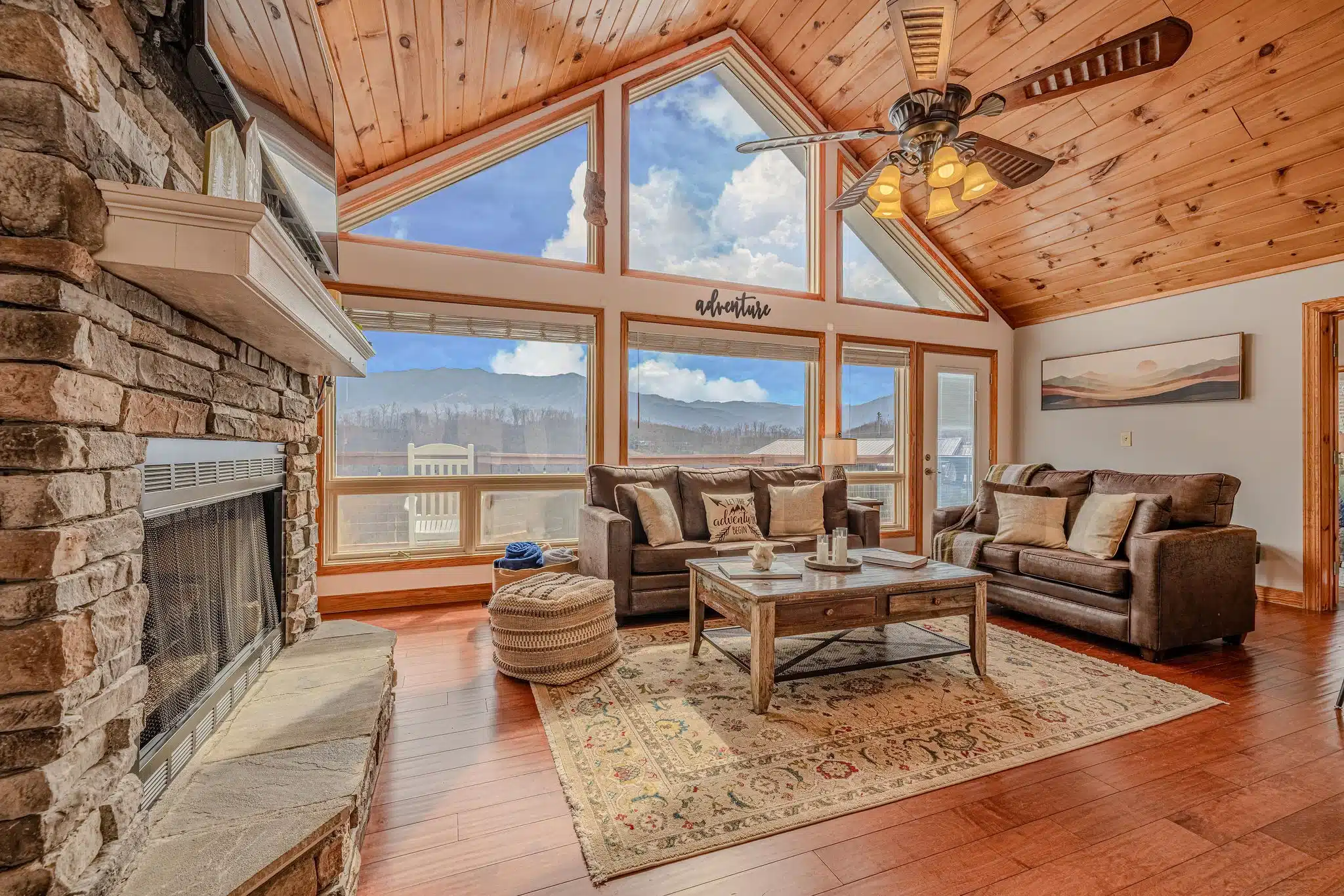
A good base for scenic driving is a cabin close to the park entrance but far enough from the Parkway to be quiet. Summit View Lodge sits above Gatlinburg in Chalet Village North, 3 miles from downtown and 4 miles from the national park entrance, and 0.7 miles from Ober Gatlinburg.
The cabin sleeps 5 with two king bedrooms, each with an ensuite bath, plus a sleeper sofa. Floor-to-ceiling windows frame Mt. LeConte, and the deck has a private hot tub, fire pit, and rocking chairs. After a morning on Newfound Gap Road, the fully equipped kitchen means lunch does not require driving back into town.
If a quiet perch matters to you, read our breakdown of where to stay in Gatlinburg, TN. If the hot tub is a deciding factor, see our comparison of Gatlinburg cabins with private hot tubs. Pools in the neighborhood are seasonal, May through September, so do not plan around them in spring or fall.
Frequently Asked Questions
How far is Clingmans Dome (Kuwohi) from Gatlinburg?
Plan on roughly an hour or a bit more each way. The route uses part of Newfound Gap Road and then a spur road to the summit area. The spur is seasonal, so check the NPS seasonal road page before you leave.
How long does it take to drive the Cades Cove Scenic Loop?
The loop is 11 miles, and most visitors allow two to four hours depending on traffic and stops. Wildlife sightings slow the line. The loop is vehicle-free on Wednesdays in spring and summer, so do not plan to drive it that day.
What are the best scenic drives in Great Smoky Mountains National Park?
Newfound Gap Road, Roaring Fork Motor Nature Trail, and Cades Cove Loop are the most popular. Foothills Parkway and Little River Road are quieter options. Match the route to your time and passengers rather than choosing by fame alone.
What are the top day trips from Gatlinburg?
Popular day trips include Newfound Gap Road to Cherokee, Cades Cove, Kuwohi, and Pigeon Forge with a stop at Dollywood. Roaring Fork fits a short half-day. Our hiking and dining guides help you add stops to each.
Is Gatlinburg worth visiting?
Yes, especially if you want fast access to the national park and a lively downtown. The National Park Service’s 2026 visitor research found that approximately 62% of park respondents visited Gatlinburg during their trip. Staying above town gives you both.
Where should I stay in Gatlinburg for a quiet retreat away from the crowds?
Summit View Lodge is a single-cabin rental perched above Gatlinburg in Chalet Village North, 3 miles from downtown, with a private hot tub, fire pit, and 180-degree views of Mt. LeConte. When comparing options, check the distance to downtown, whether parking is flat, and what the deck faces.
Do you need a reservation for scenic drives in the Smokies?
These roads generally do not require a reservation for passenger vehicles, but parking rules and fees can change. Check the park’s official site on the day you go, and review seasonal road status before leaving.
Which Scenic Drive Should You Take First?
For most visitors planning scenic drives near Gatlinburg in 2026, start with Roaring Fork if time is short and Newfound Gap Road if you have a full day. Save Cades Cove for a weekday morning and Foothills Parkway for a quieter afternoon. Check the NPS road status the morning you leave.
Whichever route you choose, the best Gatlinburg trip comes down to having a comfortable base to return to at the end of the day. That is what we built Summit View Lodge to be: a quiet perch above town with the Smokies filling every window.
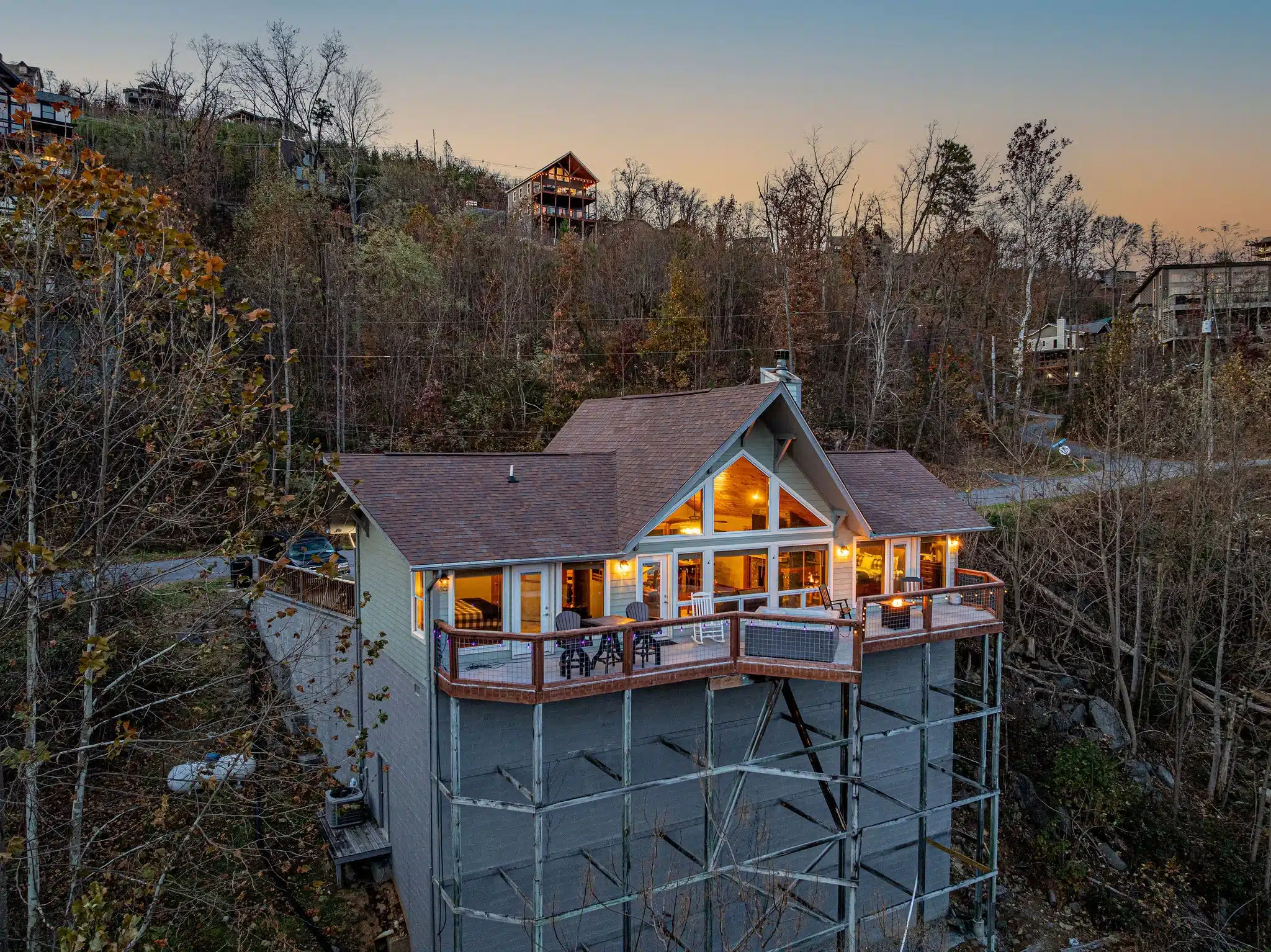
If you are planning a trip built around these drives, Summit View Lodge puts you 4 miles from the park entrance, with a private hot tub waiting when you return. You can check dates directly with the hosts.