

Yes, black bears live in and around Gatlinburg, Tennessee, and sightings inside town are common, not rare. American black bears regularly wander out of Great Smoky Mountains National Park and into Gatlinburg neighborhoods, streets, and hiking corridors, especially in spring and fall.
Key Takeaways
- Black bears, not grizzlies, are the only bear species in the Smokies, and their fur can appear black, brown, or cinnamon.
- The National Park Service’s current population estimate is 1,500 to 1,600 bears, while the City of Gatlinburg’s BearWise resource cites a 2017 to 2018 study estimating 1,909 bears and says the true number likely exceeds 2,000 today.
- Bears pass through Chalet Village and other Gatlinburg neighborhoods most often during spring den emergence and fall hyperphagia, when they eat aggressively before winter.
- Cades Cove and the Roaring Fork Motor Nature Trail are the two most reliable wild bear viewing spots near Gatlinburg, according to regional lodging guides.
- Tennessee law and park regulation require staying at least 50 yards, or 150 feet, from any bear; approaching closer is illegal inside the national park.
- Gatlinburg police reported more bear-activity calls in July 2026 alone than in the entire January through July 2023 stretch, per Knoxville News Sentinel reporting, a sign sightings are trending upward heading into 2026.
If you’re staying anywhere near the national park boundary this year, from a downtown motel to a Chalet Village cabin, the question isn’t really whether bears exist here. It’s how close they get, when you’re most likely to see one, and what to do if you do. Gatlinburg sits directly against 522,000 acres of protected forest, and the wildlife doesn’t recognize a town line.
We’ve spent years hosting guests at Summit View Lodge, a cabin perched above Gatlinburg in Chalet Village North, and bear questions come up in nearly every pre-arrival message. Guests want to know if it’s safe to sit on the deck at dusk, whether the trash needs to be locked up, and what a bear encounter on a hiking trail actually looks like. This guide answers all of that with the specifics competitors tend to gloss over: the difference between wild sightings and guaranteed captive viewing, what the conflicting population numbers actually mean, and exactly what to do in the four distinct stages of a bear encounter.
As of 2026, Great Smoky Mountains National Park remains the most visited national park in the country, and bear activity near Gatlinburg has become enough of a talking point that the city runs a dedicated management partnership with state wildlife officials. Here’s what that partnership covers, where the bears actually are, and how to plan a trip that respects them.
Are There Bears in Gatlinburg, Tennessee?
Yes. Gatlinburg sits directly against the boundary of Great Smoky Mountains National Park, and American black bears move freely between the park’s forest and the town’s outskirts, neighborhoods, and sidewalks. Sightings inside city limits, including in residential areas like Chalet Village, happen every year and are not considered unusual by local officials.
The bears found here are exclusively American black bears (Ursus americanus). No grizzly bears live in the Smokies, so any large bear spotted near Gatlinburg is a black bear, regardless of its fur color. Specifically, black bear coats in this region can appear jet black, chocolate brown, or a reddish cinnamon shade, which sometimes leads first-time visitors to mistake a brown-colored bear for a different species.
Gatlinburg’s proximity to the park is the reason sightings happen at all. As a result, the City of Gatlinburg’s BearWise Resources page treats bear encounters as a routine part of living beside wilderness, not an emergency. The city and the Tennessee Wildlife Resources Agency have jointly managed the issue since 1999, running a formal Black Bear Management Program with a dedicated Bear Management Officer on staff.
How Likely Is It to See a Bear in Gatlinburg?
Seeing a bear in Gatlinburg is genuinely possible but far from guaranteed on any single visit; most sightings cluster around dawn, dusk, and specific wooded corridors rather than downtown’s main strip. Your odds rise significantly if you spend time on quiet mountain roads, wooded trailheads, or neighborhoods bordering the forest, and drop close to zero if you stick to the parkway and shopping district.
Gatlinburg police data gives a useful signal here. According to Knoxville News Sentinel reporting on city operations, Gatlinburg received more bear-activity calls in July 2026 than during the entire January through July stretch of 2023. That points to a real, measurable uptick in sightings and human-bear interactions in recent years, not just increased public awareness.
For wild bear viewing specifically, Cades Cove and the Roaring Fork Motor Nature Trail are consistently named the most productive spots by regional guides. Cades Cove sits roughly 45 to 50 minutes from Chalet Village, while Roaring Fork is closer at around 15 minutes. Neither location guarantees a sighting; bears move on their own schedule, and a slow, wildlife-free drive through Cades Cove on a summer afternoon is common.
What Month Are Bears Most Active in Gatlinburg?
Bear activity near Gatlinburg peaks during two distinct windows: spring, when bears emerge from winter dens and search for food after months of low activity, and late summer into fall, when bears enter hyperphagia, a period of intense eating to build fat reserves before winter. Sightings in town, including on residential streets, are most common during these stretches.
Spring den emergence typically brings bears, especially mothers with new cubs, into lower-elevation areas in search of easy calories: budding plants, insects, and unfortunately unsecured trash. This is also when younger bears disperse from their mothers and wander into unfamiliar territory, sometimes ending up in neighborhoods they’d normally avoid.
Fall hyperphagia is the second major activity spike. A bear preparing for winter can spend nearly the entire day foraging, and that search naturally extends into fruit trees, bird feeders, and garbage cans near Gatlinburg’s edge neighborhoods. Combine that with fall foliage tourism season, when the town’s population swells, and you get more reported encounters simply because more people and more hungry bears occupy the same space at the same time.
Summer sits between these two peaks but is far from quiet. The Knoxville News Sentinel’s 2026 reporting specifically flagged summer, alongside spring, as a season when Gatlinburg sightings, including on city sidewalks, become unsurprising.
How Many Bears Actually Live in the Smokies?
Population estimates for black bears in Great Smoky Mountains National Park vary depending on the source and study year, ranging from roughly 1,500 to more than 2,000 bears. The differences come down to survey methodology and timing, not disagreement about whether bears are common here.
The National Park Service’s Black Bear Management page currently estimates the population at 1,500 to 1,600 bears, calling it the largest count recorded in the park’s history. Separately, the City of Gatlinburg’s BearWise resource cites a study estimating 1,909 bears based on data collected in 2017 and 2018, and the city now states the real number likely exceeds 2,000 given natural population growth since that survey.
Neither figure is wrong; they reflect different data collection windows and different agencies’ most recent published analysis. What matters practically is the density: Great Smoky Mountains National Park has one of the highest concentrations of black bears in the eastern United States, packed into roughly 800 square miles that directly border Gatlinburg. That density is exactly why sightings within town limits aren’t a fluke.
Are Black Bears Aggressive in the Smoky Mountains?
Black bears in the Smokies are generally not aggressive toward humans and prefer to avoid contact, but they can act defensively if surprised, protecting cubs, or habituated to human food. Predatory attacks on people are extremely rare in this region; most negative encounters stem from bears associating people with an easy meal.
A bear that hasn’t noticed you will typically continue foraging or move away on its own if left alone. A bear that has noticed you and is displaying stress signals, such as jaw-clacking, huffing, or swiping the ground, is telling you to back off, not preparing to charge. A bluff charge, where a bear runs toward you and stops short, is a warning, not necessarily an attack.
Bears that have learned to associate coolers, trash cans, or campsites with food are the ones most likely to approach people directly. That’s the entire reason behind Gatlinburg’s bear-proof trash bin requirements and the national park’s strict food-storage rules; removing the food reward removes most of the aggression risk entirely.
Wild Bear Sightings vs. Guaranteed Bear Viewing: What’s the Difference?
Wild bear viewing near Gatlinburg means spotting a free-roaming bear in its natural habitat, an experience that is unpredictable and never guaranteed, while captive viewing at attractions offers a controlled, near-certain look at bears in an enclosed habitat. Confusing the two leads to disappointed expectations on both ends.
For genuinely wild sightings, Cades Cove, the Roaring Fork Motor Nature Trail, the Little River Auto Tour, and the Cataloochee area are the four locations most consistently named by regional guides. Cataloochee sits about 1 hour 15 minutes from Chalet Village, the farthest of the group, but is also one of the least crowded. None of these locations promise a bear encounter on any given visit, and a bear-free drive through any of them is entirely normal.
For guests who want a guaranteed look at a bear, Ober Mountain’s Wildlife Encounter in downtown Gatlinburg offers a controlled habitat viewing experience, and Three Bears General Store in Pigeon Forge maintains a roughly 5,000-square-foot live bear habitat. Access pricing at Ober Mountain has historically been bundled into a day-activity wristband, so confirm current admission details directly with the attraction before visiting, since prices change.
Do Bears Come Into Gatlinburg Neighborhoods Like Chalet Village?
Bears do pass through Gatlinburg neighborhoods bordering the forest, including Chalet Village, particularly during spring den emergence and fall hyperphagia. A bear moving through a residential street or yard at dawn or dusk is typically passing through in search of food, not seeking out human contact.
This is precisely why Chalet Village properties, including Summit View Lodge, use bear-proof bins for all trash and recyclables rather than standard curbside pickup. There’s no separate recycling service in the neighborhood, so everything, food waste and recyclables alike, goes into the outdoor bear-resistant bins provided at the property. Guests grilling on the deck are asked to slide the grease drip pan back into place after cooking, since dripped grease is exactly the kind of low-effort food reward that draws bears toward decks and patios.
None of this should discourage evenings on the deck. In practice, a secured trash bin and a clean grill eliminate almost all the risk. Guests staying at the cabin, three miles from downtown Gatlinburg and four miles from the national park entrance, are close enough to the forest edge that a bear sighting from the deck or driveway is possible, but the property’s food-storage setup is built specifically around preventing the habituation that causes most conflicts.
What Should You Do During a Bear Encounter?
The correct response to a bear encounter depends entirely on the bear’s behavior, and treating every stage the same way is the most common mistake visitors make. Follow this sequence based on what the bear is actually doing:
- The bear hasn’t noticed you: Do not approach. Stay quiet, keep your distance, and let the bear move on naturally without drawing its attention.
- The bear has noticed you but hasn’t reacted: Back away slowly, moving sideways rather than turning your back, while speaking in a calm, low, steady voice. Never run.
- The bear shows stress signals (jaw-clacking, huffing, ground-swiping, or a bluff charge): You are too close. Continue backing away calmly and give the bear more space immediately.
- The bear approaches you directly: Stand your ground. Wave your arms, shout, and make yourself appear as large and intimidating as possible. Do not run or play dead with a black bear.
- The bear makes physical contact or attacks: Fight back using sticks, rocks, or anything available, and target the bear’s face and eyes.
These stages come directly from guidance published by regional Smoky Mountains safety resources and align with BearWise, the conflict-prevention framework the City of Gatlinburg’s own bear program relies on. Running triggers a chase instinct in most bears, which is why every stage above, except a direct attack, calls for staying calm and moving away deliberately rather than sprinting.
How Far Do You Need to Stay From a Bear?
Federal regulation and Tennessee wildlife guidance require staying at least 50 yards, roughly 150 feet, from any bear inside Great Smoky Mountains National Park. Intentionally approaching closer than that, even for a photo, is illegal, not just discouraged.
Fifty yards is farther than most visitors instinctively estimate; it’s about half the length of a football field. A bear that looks small and distant through a phone camera is very likely still inside that buffer zone if you can see detail on its face. The safest approach is to view bears from inside a vehicle whenever possible, or to use a zoom lens rather than closing distance for a clearer shot.
Feeding a bear, intentionally or through carelessness with food and trash, carries the same legal weight as approaching one. The Great Smoky Mountains National Park wildlife regulations treat both violations seriously because a fed bear becomes a habituated bear, and habituated bears are far more likely to be euthanized after repeated conflicts. Reporting a bear sighting or a visitor violating these rules can be done through Gatlinburg’s dedicated line noted below, or directly to the Gatlinburg Police Department.
How Do You Secure Food and Trash to Avoid Bear Encounters?
Securing attractants is the single most effective way to prevent a bear encounter from turning into a conflict, according to both the National Park Service and BearWise guidance. This means keeping food, garbage, and anything scented locked away from bears at all times, not just overnight.
Inside the park, campers and hikers should never leave food unattended outside a vehicle, should pack all trash out of the backcountry, and should use bear-proof trash receptacles wherever they’re provided. Backcountry campers specifically need to use designated sites equipped with bear cables and hang food and packs whenever they’re not actively in use, even during short breaks.
Around Gatlinburg cabins, the same logic applies at a smaller scale. BearWise basics recommend never feeding or approaching bears, securing garbage and recycling in bear-resistant containers, removing bird feeders during active bear months, keeping pet food indoors rather than on a porch, and cleaning grills thoroughly after every use. At Chalet Village properties like Summit View Lodge, this looks like using the outdoor bear-proof bins for all waste and returning the grill’s grease pan to its housing after cooking, small habits that meaningfully reduce the chance of an unwanted visitor.
Where Should You Stay in Gatlinburg If You Want to See Bears (Safely)?
The best base for bear-adjacent trips balances proximity to viewing areas like Roaring Fork and Cades Cove with a setup that already accounts for wildlife, bear-proof trash storage, secured grills, and no ground-level food attractants. Chalet Village North fits that description well, sitting close enough to the forest for genuine wildlife presence without requiring guests to manage bear safety on their own.
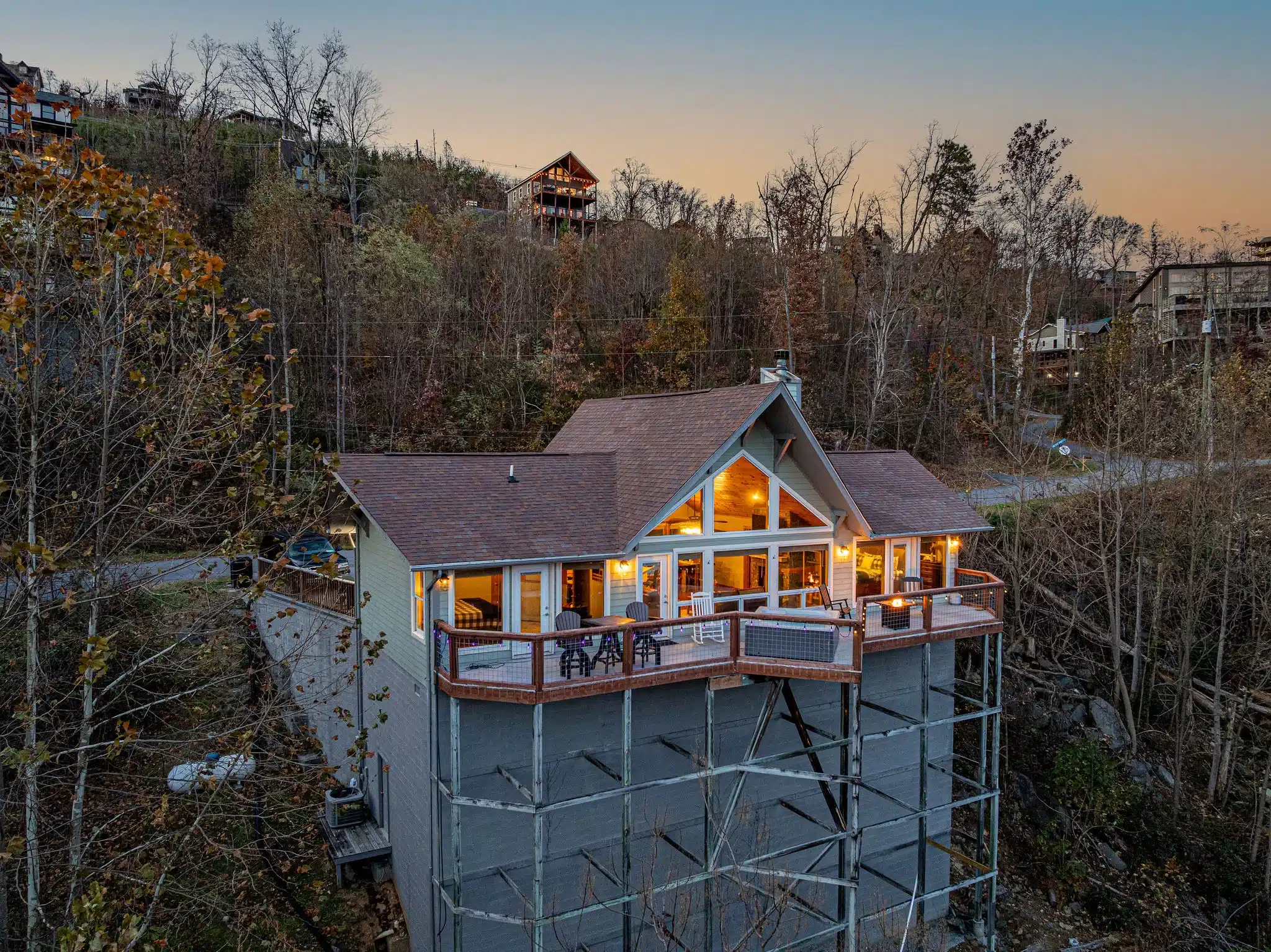
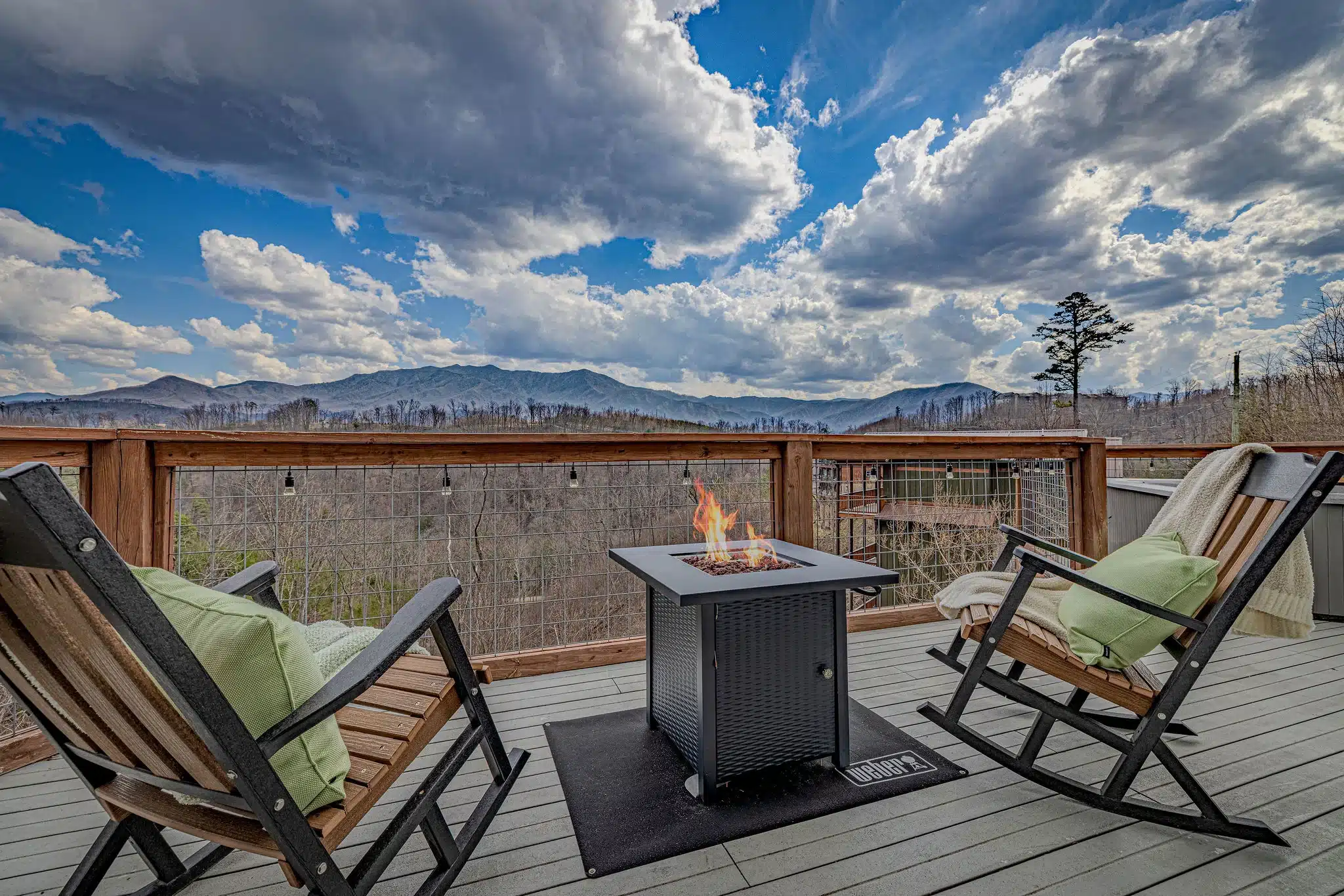
Summit View Lodge, our single-level cabin in Chalet Village North, sits three miles from downtown Gatlinburg and four miles from the Great Smoky Mountains National Park entrance, roughly 15 minutes from the Roaring Fork Motor Nature Trail turnoff. Sleeping up to five guests across two king ensuite bedrooms plus a sleeper sofa, the cabin’s deck looks out over the forested ridgeline toward Mt. LeConte, exactly the kind of edge-of-wilderness setting where a bear sighting at dawn or dusk is genuinely possible.
The property is already set up for it: bear-resistant bins handle all trash and recycling since there’s no separate pickup service in the neighborhood, and the propane grill’s drip pan is designed to be secured after each use. Guests can relax in the private hot tub or around the fire pit at night with that groundwork already handled. If a wildlife-adjacent mountain base with a real view of the Smokies sounds like the right fit, check availability at Summit View Lodge.
For trip planning beyond wildlife, our guide to hiking Chimney Tops Trail covers another popular wildlife corridor near the park entrance, and if bear sightings aren’t your main draw, our piece on whether Gatlinburg is worth visiting breaks down the town honestly.
What Should Families Know Before Hiking With Kids Near Bear Habitat?
Hiking with children in bear country requires the same core precautions as solo hiking, applied with more supervision and less flexibility for improvisation. Keep kids within arm’s reach on trails, make noise as a group while walking, and never let a child run ahead or lag behind out of sight.
Trails closer to Gatlinburg’s edge, including sections near the Roaring Fork Motor Nature Trail and the Gatlinburg Trail along the Little Pigeon River, see enough foot traffic that bears tend to be more cautious, but that’s not a guarantee. Teach kids in advance that a bear sighting means freezing, staying quiet, and following an adult’s lead rather than running or approaching for a closer look.
Snacks and juice boxes should stay zipped in a pack, not held loosely in a child’s hand on the trail; dropped food is one of the more common ways young hikers unintentionally create a bear encounter. Our guide to Gatlinburg with kids covers trail picks that fit shorter attention spans and lower elevation gain, useful if wildlife caution is already limiting how far your family wants to hike.
Frequently Asked Questions
How likely is it to see a bear in Gatlinburg?
It’s possible but not guaranteed on any single trip. Your odds improve significantly near forest-edge neighborhoods, quiet trailheads, and locations like Cades Cove or the Roaring Fork Motor Nature Trail, especially at dawn or dusk. Gatlinburg police reported a sharp rise in bear-activity calls during the summer of 2026, suggesting sightings have become more frequent in recent years.
Do you need bear spray in Gatlinburg?
Bear spray isn’t required or commonly used for black bears in the Smokies, and it’s not standard advice from the National Park Service or the City of Gatlinburg for this region. Standing your ground, making noise, and appearing large is the recommended response if a black bear approaches, rather than relying on spray.
What month are bears most active in Gatlinburg?
Bear activity peaks in spring, during den emergence, and again in late summer through fall, during hyperphagia when bears eat heavily before winter. Sightings on Gatlinburg streets and sidewalks are documented as most common during these two windows.
Are black bears aggressive in the Smoky Mountains?
Black bears here are generally not aggressive and prefer avoiding humans, but they can act defensively if surprised, guarding cubs, or accustomed to human food. Predatory attacks on people are extremely rare, and most negative encounters trace back to a bear associating people with an easy meal.
What should I do if I encounter a bear near my Gatlinburg cabin?
If the bear hasn’t noticed you, stay still and quiet and let it move on. If it has noticed you, back away slowly while speaking calmly, and never run. If it approaches, stand your ground, wave your arms, and make loud noise; only fight back if physical contact occurs.
How far is it to Gatlinburg, Tennessee, from major bear-viewing areas?
From Chalet Village, the Roaring Fork Motor Nature Trail is roughly 15 minutes away, Cades Cove is about 45 to 50 minutes, and the Cataloochee area runs closer to 1 hour 15 minutes. All three sit inside Great Smoky Mountains National Park and are named among the most reliable wild bear viewing locations in the region.
Can you guarantee seeing a bear in Gatlinburg?
No wild sighting can be guaranteed since bears move on their own schedule through open forest. For a near-certain look, Ober Mountain’s Wildlife Encounter in downtown Gatlinburg and the live bear habitat at Three Bears General Store in Pigeon Forge offer controlled, captive viewing as an alternative to unpredictable wild sightings.
Are pets allowed at Summit View Lodge given the bear activity nearby?
Pet policy details for Summit View Lodge should be confirmed directly through the booking listing before your stay. Regardless of pet policy, any pet food or water bowls at a Smoky Mountains cabin should be kept indoors, since exposed pet food is a known bear attractant.
Conclusion: Planning a Gatlinburg Trip Around Bear Country
Bears are a genuine, ongoing part of life in and around Gatlinburg, not a rare curiosity. With a black bear population estimated between 1,500 and roughly 2,000 in Great Smoky Mountains National Park, sightings near town, on trails, and even in residential neighborhoods like Chalet Village are a realistic possibility on any given trip in 2026.
The trip-planning takeaway is straightforward: build in a little bear awareness rather than avoiding the area. Secure food and trash, keep 50 yards of distance if you spot one, and know the difference between a bear that hasn’t noticed you and one that’s stressed and warning you off. Do that, and a bear sighting becomes one of the more memorable parts of a Smoky Mountains trip rather than a source of worry.
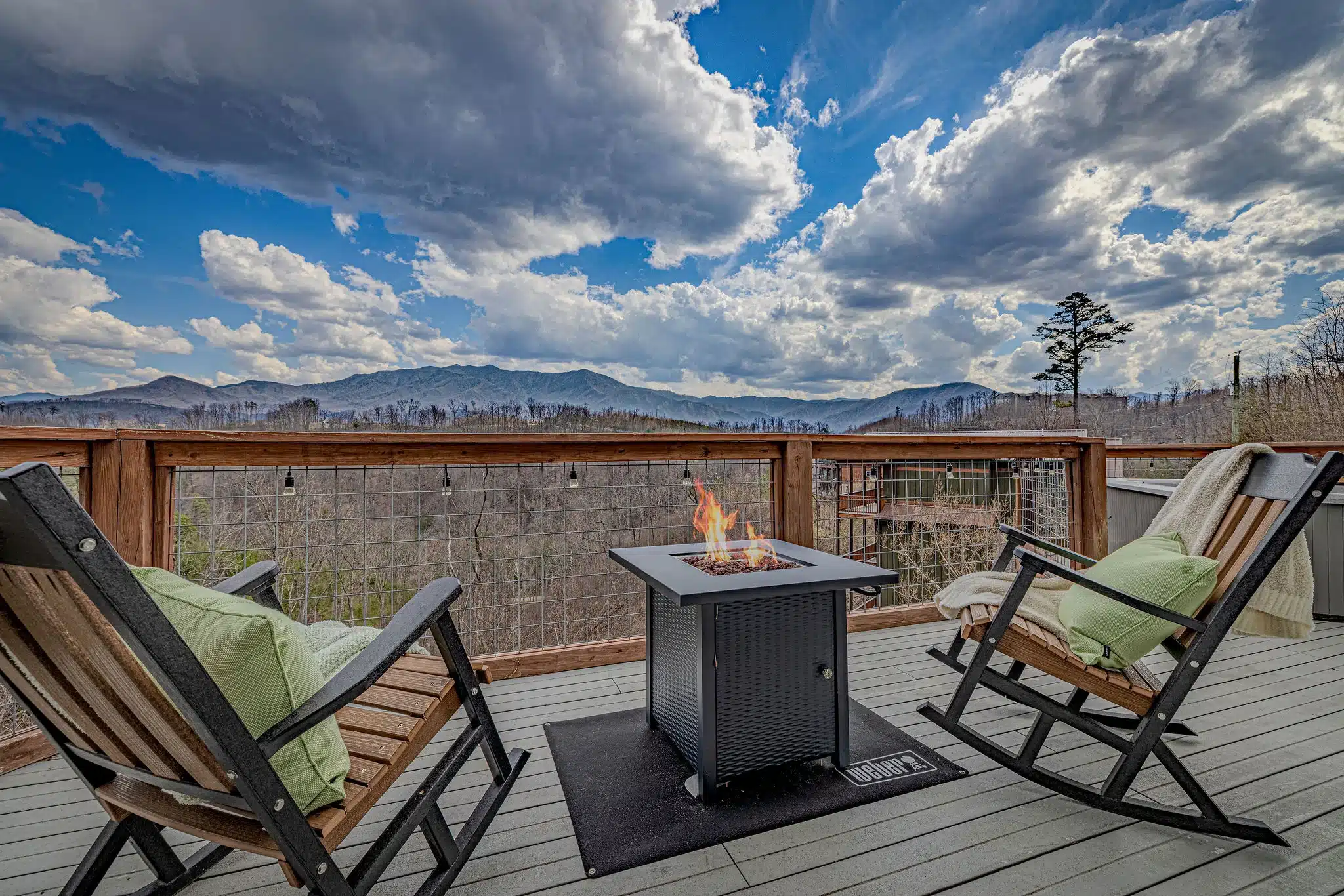
If a mountain base close to real bear habitat, with the food-storage groundwork already handled, sounds like the right fit, Summit View Lodge sits three miles from downtown Gatlinburg with a deck facing straight toward the forested ridgeline below Mt. LeConte. The bear-proof bins and secured grill setup mean you can enjoy the fire pit and hot tub without extra planning. See availability at Summit View Lodge.