
The non-touristy side of Gatlinburg lives above the Parkway crowds and past the Highway 321 split, where the Roaring Fork Motor Nature Trail and the Great Smoky Arts and Crafts Community replace fudge shops and taffy stands. You reach it by driving away from downtown, not deeper into it.
Key Takeaways
- The Roaring Fork Motor Nature Trail is a 5.5-mile, one-way scenic loop that starts at Gatlinburg traffic light number 8 and skips the Parkway entirely.
- The Great Smoky Arts and Crafts Community is an 8-mile loop of working artisan studios about 3 miles from downtown Gatlinburg, active since 1937 as part of the Tennessee Heritage Arts and Crafts Trail.
- Grotto Falls is the only trail in Great Smoky Mountains National Park where you can walk behind a waterfall, and Baskins Creek Falls offers a quieter 3-mile alternative to a 25-foot cascade.
- Great Smoky Mountains National Park drew roughly 12.2 million visitors in 2026, spending more than $2 billion in nearby communities, and about 62% of surveyed 2026 park visitors also stopped in Gatlinburg, according to National Park Service data.
- Gatlinburg’s short-term rental occupancy sits around 41.1% to 45.3% depending on the source, and average daily rates run roughly $354 to $373 a night as of 2026, per AirROI, which means quieter travel windows are easier to find than most visitors assume.
- Staying above town in Chalet Village North, three miles from downtown Gatlinburg, puts you closer to these quieter routes than staying inside the Parkway crowd.
If you’ve already walked the Parkway once, you know the drill: fudge shops, taffy pulls, a Ripley’s attraction every fifty feet, and a line for pancakes that snakes out the door before 9 a.m. That’s a fine way to spend an afternoon, but it’s not why most repeat visitors keep coming back to Gatlinburg, Tennessee. What to do in Gatlinburg that isn’t touristy means finding the parts of town, and the park beyond it, that feel like they belong to the mountains instead of the marketing.
At Summit View Lodge, we’ve spent years watching guests figure out which routes deliver a quieter Smoky Mountains experience and which ones are just a different flavor of crowded. The pattern is consistent: leave the Parkway, drive past the Highway 321 split, and head toward Cherokee Orchard Road or the arts community loop instead of another downtown attraction.
This guide covers scenic drives, waterfall hikes with real trailhead logistics, and artisan studios that have operated since the 1930s, plus a handful of small museums and local shops that draw more locals than tour buses. Every recommendation includes distance, difficulty, or timing details, because “hidden gem” without specifics is just a marketing phrase.
What Are Some Hidden Things to Do in Gatlinburg, TN?
The hidden side of Gatlinburg is largely a driving and hiking experience concentrated on Cherokee Orchard Road, the Roaring Fork Motor Nature Trail, and the lesser-known trailheads inside Great Smoky Mountains National Park. These spots sit minutes from downtown but see a fraction of the Parkway’s foot traffic, especially before 9 a.m.
Start with the Roaring Fork Motor Nature Trail, a 5.5-mile, one-way loop that begins at Gatlinburg traffic light number 8. Follow Historic Nature Trail Road to the Cherokee Orchard entrance of the national park, then merge onto the one-way loop itself. Drive it at sunrise if you can; the road is narrow, gravel in sections, and closed in winter, so check current conditions with the National Park Service before you go.
Baskins Creek Falls branches off this same route. It’s a roughly 3-mile round-trip hike to a 25-foot waterfall, and it’s noticeably less crowded than the marquee falls closer to Newfound Gap Road. The trail has a few rocky, uneven stretches, so it’s a better fit for capable hikers than toddlers or anyone with mobility concerns.
Farther out, Elkmont offers a quieter mountain-area visit than anything downtown. It’s a former resort community turned historic district inside the park, with fewer amenities and far fewer tour buses. It rewards visitors who don’t need a gift shop at the end of the trail.
What Are Some Non-Touristy Activities in the Smoky Mountains?
Non-touristy Smoky Mountains activities generally fall into two categories: scenic drives away from Newfound Gap Road’s peak traffic, and moderate hikes to waterfalls or working artisan studios that don’t appear on every brochure. The common thread is distance from the Parkway and a willingness to drive a little farther.
Newfound Gap Road runs about 30 miles from Gatlinburg to Cherokee, North Carolina, and it’s scenic, but it gets backed up on weekends and during fall color season. If you want the same mountain crossing with fewer cars, go on a weekday morning, ideally before 9 a.m., and pack a thermos instead of planning to stop at every overlook.
Grotto Falls, reached from the Trillium Gap Trailhead off the Roaring Fork loop, is the only waterfall trail in the entire national park where you can walk behind the falls. It’s roughly 3 miles round trip with a moderate elevation gain, manageable for most hikers over the age of eight, but it does get busier by midday, so an early start matters here too.
The Chimney Rock picnic area, mentioned by regional guides as a good first stop into the mountains, is a low-key alternative to staying downtown. It has picnic tables, restrooms, and creek access without the retail density of the Parkway. Bring your own food; there’s no concession stand.
Where Do Locals Go in Gatlinburg?
Locals in Gatlinburg tend to gather at the Great Smoky Arts and Crafts Community, Mynatt Park, and a handful of independently owned restaurants and shops tucked off the main Parkway rather than on it. These spots trade souvenir volume for craftsmanship and neighborhood familiarity.
The Great Smoky Arts and Crafts Community is an 8-mile loop of working studios about 3 miles from downtown Gatlinburg, part of the Tennessee Heritage Arts and Crafts Trail. Artisans have worked here since 1937, making it one of the longest continuously operating craft communities in the country. Expect potters, woodworkers, and glassblowers working at their benches, not just selling imported goods. Budget an hour if you’re just browsing, half a day if you plan to buy.
Mynatt Park, off Cherokee Orchard Road, is where families who live in Gatlinburg spend Saturday mornings. It has a playground, basketball and tennis courts, a walking trail, and pickleball courts, plus a memorial wall honoring those affected by the 2016 wildfires. It’s free, it’s quiet, and it’s not on most visitor itineraries.
For food, locals favor spots like Tom & Earl’s Back Alley Grill and Mountain Edge Grill over Parkway chains, both mentioned in regional off-the-beaten-path roundups for their casual, unfussy menus. Neither requires a reservation, but both can have a short wait on weekend evenings.
If you’re staying at Summit View Lodge in Chalet Village North, you’re already three miles closer to this loop than most downtown hotel guests, which shaves real time off the drive to the crafts community and the Roaring Fork trailhead alike.
What Are Some Unique Things for Adults to Do in Gatlinburg?
Unique adult activities in Gatlinburg skew toward small museums, a working winery, a cidery, and craft studios rather than the arcade-and-taffy scene built for families. These stops reward slower browsing and a willingness to talk to the people who make what they sell.
The Salt and Pepper Shaker Museum, located in Winery Square, holds more than 20,000 individual salt and pepper shaker sets and has a sister museum in Spain. It’s an oddly specific, well-curated private collection worth a short detour. Plan for 20 to 30 minutes; it’s not a large space.
Gatlinburg Winery and Tennessee Stud Cider both offer tastings that skip the Parkway crowd entirely. The winery’s tasting room is casual and unhurried on weekday afternoons, though weekend tastings draw a steadier stream of visitors. Misty Mountain Soap Company, a small-batch maker of natural soaps and lotions, is worth a stop if you want a souvenir that isn’t mass produced.
For something quieter still, The Next Chapter Bookshop and Old School Music and Gifts fall into the category of shops locals actually use, not tourist-facing storefronts. Rocky Flats Pottery & Soap and Black Bear Crafts round out a short list of independent makers worth a slow afternoon.
If you want structured adventure without the theme-park feel, CLIMB Works runs guided side-by-side zipline tours near the national park entrance. It’s a paid, mainstream activity, but it’s outdoor-focused rather than arcade-focused, which sets it apart from most Parkway attractions.
How Do You Avoid the Crowds With a Real Itinerary?
Avoiding crowds in Gatlinburg comes down to timing and sequencing: start before 8 a.m., hit the national park trailheads first, and save the arts and crafts community or a local restaurant for after 11 a.m. when day-trippers are still stuck in Parkway traffic. This isn’t a secret so much as a discipline most visitors skip.
Here’s a realistic sequence for a non-touristy day, driving from a base in Chalet Village North:
- Leave by 7:30 a.m. and drive the Roaring Fork Motor Nature Trail while the light is low and the pull-offs are empty.
- Park at the Trillium Gap Trailhead and hike to Grotto Falls, arriving before 9 a.m. to beat the midday crowd that builds by 11.
- Drive back toward the Great Smoky Arts and Crafts Community loop by 10:30 a.m., when studios are open but tour buses haven’t arrived yet.
- Eat lunch at a locally owned spot like Mountain Edge Grill or the New Orleans Sandwich Company in The Village Shops, both away from the densest Parkway block.
- Spend the afternoon at Mynatt Park or browsing independent shops like The Next Chapter Bookshop before traffic peaks again around 4 p.m.
Parking is the detail most guides skip. Roaring Fork’s pull-offs are small and fill fast on weekends, so a weekday visit helps. The Great Smoky Arts and Crafts Community has its own dedicated lots at most studios, a real advantage over hunting for downtown Parkway parking. If you’re wondering whether three days is enough to cover both the quiet routes and a downtown afternoon, this sequencing works well as a template for each day of a longer stay.
What Should You Skip Near Gatlinburg?
Skip the Parkway during midday on weekends and during fall color season, when traffic backs up for blocks and parking becomes a real time cost rather than an inconvenience. The same applies to the busiest downtown attractions between 11 a.m. and 3 p.m., when tour groups and day-trippers overlap.
This doesn’t mean every mainstream attraction is a waste. The Gatlinburg SkyLift, which rises 500 feet from downtown to the top of Crockett Mountain, is a paid, clearly touristy attraction, but it delivers a real view and a short line if you go right at opening. The honest move is acknowledging it’s mainstream rather than pretending it’s a secret.
Newfound Gap Road during peak fall weekends is the other one to reconsider. The 30-mile drive to Cherokee, North Carolina is worth doing, just not on a Saturday in mid-October when every overlook has a line of cars waiting for a parking spot. A Tuesday morning in November delivers nearly the same scenery with a fraction of the traffic.
If a rainy day forces you off the trails, this season-by-season guide to Gatlinburg activities covers indoor alternatives that still skip the busiest attractions.
How Does Responsible Visiting Work Around Gatlinburg’s Quiet Spots?
Responsible visiting around Gatlinburg’s quieter trails and artisan studios means respecting posted parking limits, keeping a safe distance from wildlife, and buying directly from the makers in the Great Smoky Arts and Crafts Community rather than treating studios as photo backdrops. These small habits keep low-traffic spots low-traffic.
On Roaring Fork and similar routes, park only in designated pull-offs. Illegally parked cars on narrow mountain roads create real safety hazards and are a common source of ranger citations. The National Park Service enforces this actively, especially during fall color season.
Wildlife encounters are common enough in this region that they deserve a real plan, not just a warning. If you’d like a fuller breakdown of what to do if you spot a bear near a trailhead or cabin, this local safety guide on bears in Gatlinburg covers it in more depth than a quick caution here can.
At the arts and crafts community, remember these are working studios, not museums. Buying a small piece, even inexpensive pottery or a hand-poured candle, supports artisans who have kept this loop running since 1937. Ask before photographing someone mid-work; most are happy to talk about their process if you ask first.
Why Does Gatlinburg Still Draw So Many Visitors Even During Quieter Travel Windows?
Gatlinburg’s visitor volume stays high because it functions as the primary gateway town to Great Smoky Mountains National Park, which recorded roughly 12.2 million visits in 2026 according to the National Park Service, generating more than $2 billion in spending across nearby communities. About 62% of surveyed 2026 park visitors reported also stopping in Gatlinburg during their trip.
Practically, even a quiet, non-touristy day in the mountains happens against a backdrop of real regional tourism volume. Tennessee welcomed 150 million visitors statewide in 2026, spending $32.5 billion, with lodging representing 23% of that spending, per the Tennessee Department of Tourist Development. That statewide demand keeps Gatlinburg busy year-round, not just during summer.
The upside for travelers seeking a quieter trip is that short-term rental occupancy in Gatlinburg has softened recently. AirROI’s 2026 data puts occupancy around 45.3%, with AirDNA’s separate market overview citing 53%, and both sources note January, February, and May as the lowest-demand months. A late-winter or spring weekday trip delivers fewer crowds on the trails and easier availability at cabins above town, including at Summit View Lodge in Chalet Village North.
Average daily rates for Gatlinburg short-term rentals run roughly $354 to $373 a night as of 2026 depending on the data source. The underlying signal matters more than any single figure: demand is strong but not evenly distributed, so timing your visit around the quieter months stretches both your budget and your patience with traffic.
| Non-Touristy Stop | Distance from Downtown Gatlinburg | Best Time to Visit | Cost |
|---|---|---|---|
| Roaring Fork Motor Nature Trail | Starts at traffic light 8, in town | Sunrise, weekdays | Free (park entrance) |
| Grotto Falls / Trillium Gap Trailhead | Off Roaring Fork loop | Before 9 a.m. | Free |
| Great Smoky Arts and Crafts Community | About 3 miles | Weekday mornings | Free to browse; pieces vary in price |
| Baskins Creek Falls | Off Roaring Fork loop | Weekday mornings | Free |
| Mynatt Park | Off Cherokee Orchard Road | Anytime, less busy weekday mornings | Free |
| Salt and Pepper Shaker Museum | Downtown, Winery Square | Weekdays, avoid midday weekend rush | Small admission fee |
What Makes Chalet Village North a Good Base for a Non-Touristy Trip?
Chalet Village North is a residential mountain neighborhood above Gatlinburg that puts travelers closer to the Roaring Fork trailhead and the arts and crafts community than a downtown hotel room, while still keeping the Parkway within a short drive when you want it. That combination of quiet and access is the point of basing yourself here.
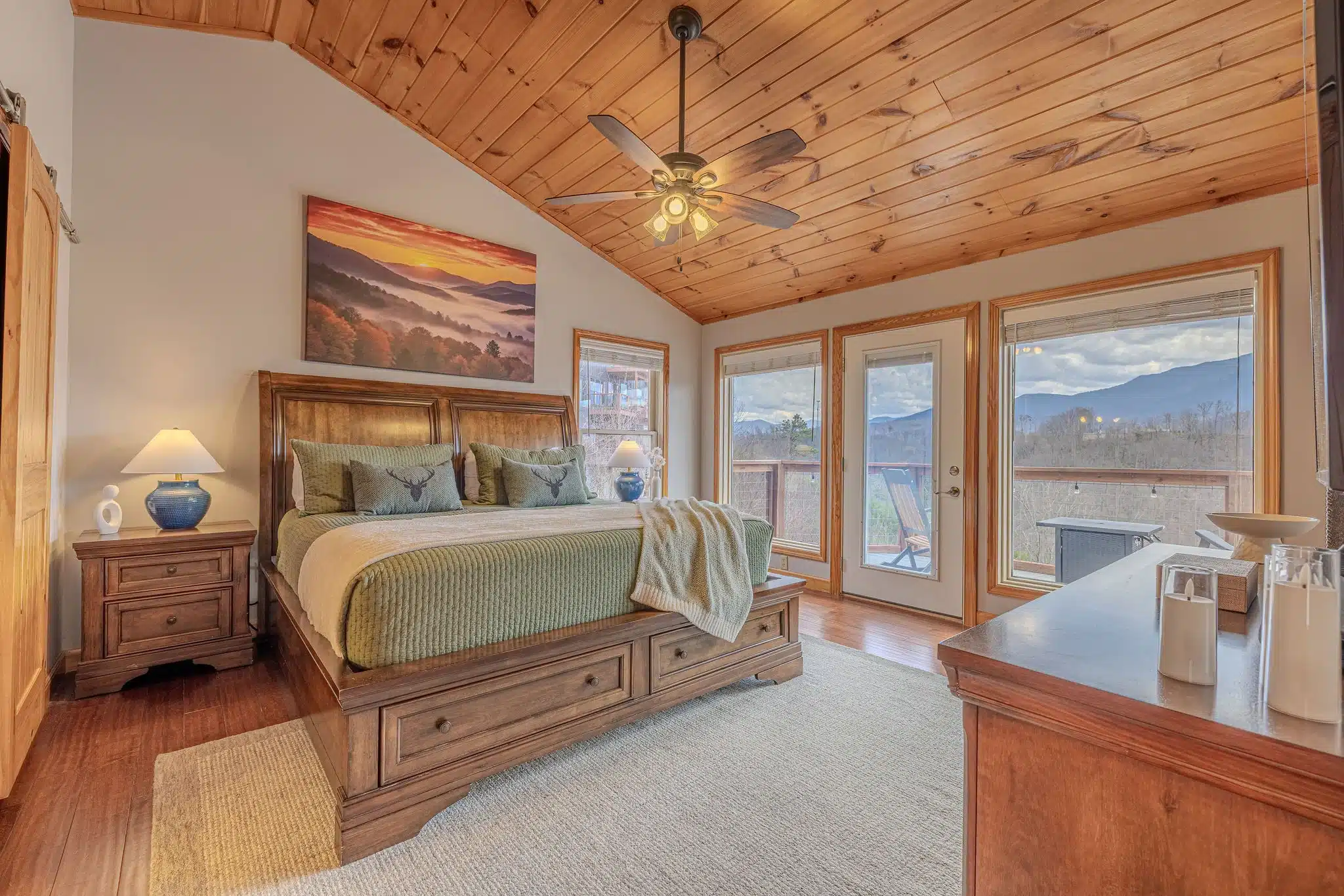
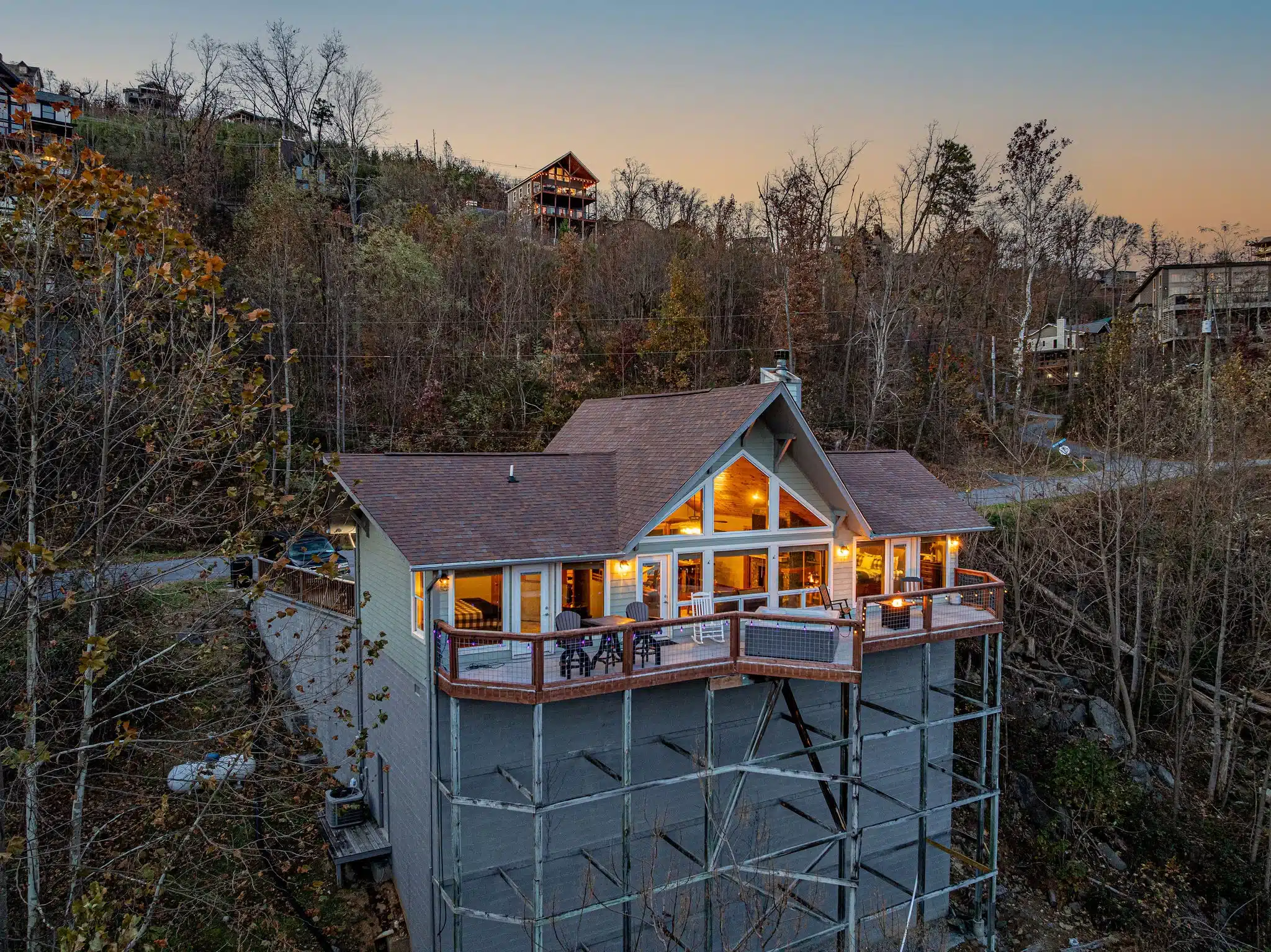
Summit View Lodge sits in this neighborhood, three miles from downtown Gatlinburg and four miles from the national park entrance, with Ober Gatlinburg less than a mile away. The cabin sleeps five across two king ensuite bedrooms and a sleeper sofa, with floor-to-ceiling windows framing Mt. LeConte from nearly every room.
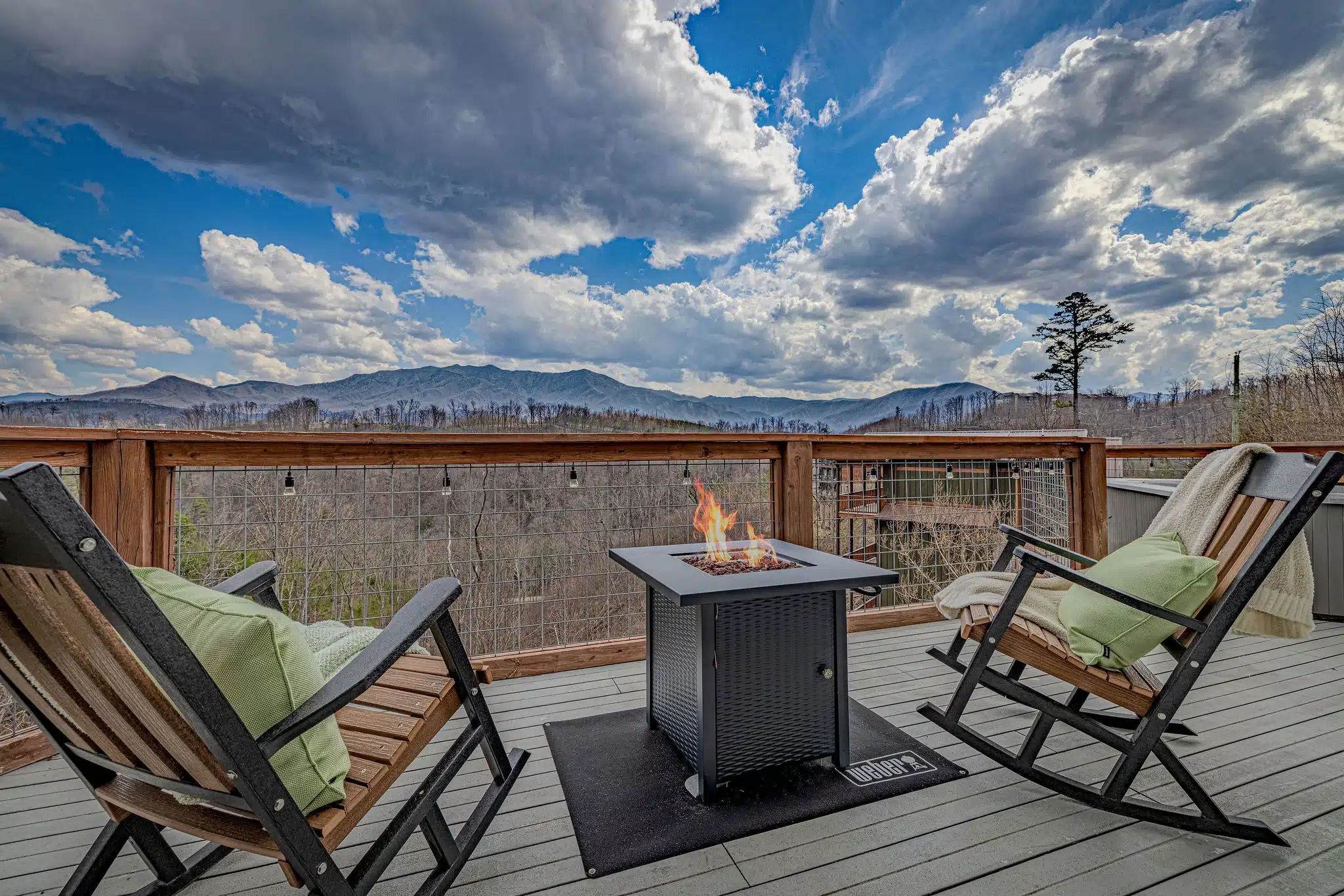
After an early start on Roaring Fork or a morning at Grotto Falls, the private hot tub on the view deck and the fire pit make for a real reset before heading out again. The fully equipped kitchen, complete with a coffee maker and rice maker, means you can skip a crowded Parkway breakfast and get on the road while the pull-offs are still empty.
For groups weighing whether to stay downtown or above town, this local host’s honest take on whether Gatlinburg is worth visiting digs into that trade-off in more detail, including how neighborhood choice affects your access to the quieter routes covered here.
Frequently Asked Questions
What are the top day trips from Gatlinburg?
The strongest day trips from Gatlinburg include driving Newfound Gap Road roughly 30 miles to Cherokee, North Carolina, exploring Elkmont’s historic district inside the national park, or spending a half day in the Great Smoky Arts and Crafts Community. Each works best on a weekday morning to avoid peak Parkway and overlook traffic.
What neighborhood in Gatlinburg is best for solo travelers?
Chalet Village North works well for solo travelers who want quiet mornings and easy access to trailheads like Roaring Fork without downtown noise at night. For a fuller breakdown of solo-specific logistics, including dining and hiking solo, see this real guide to solo travel in Gatlinburg.
What are the best months for enjoying Gatlinburg’s local cuisine and seasonal foods?
Fall brings the most seasonal variety, with cideries like Tennessee Stud Cider and harvest-driven menus at local grills in full swing. Spring is a close second, when patio dining opens back up and crowds are lighter than peak summer, making it easier to get a table at smaller, locally owned spots without a wait.
What to do in Gatlinburg that isn’t touristy on a first visit?
On a first visit, prioritize the Roaring Fork Motor Nature Trail, a hike to Grotto Falls, and an hour browsing the Great Smoky Arts and Crafts Community. All three sit within a few miles of downtown Gatlinburg but see far less foot traffic than the Parkway, especially before 9 a.m.
What is there to do in Gatlinburg, TN, when you want to avoid crowds entirely?
Weekday mornings before 9 a.m. are the single best lever for avoiding crowds anywhere near Gatlinburg, whether that’s a national park trailhead or the arts and crafts loop. Pairing that timing with a base above town, like Chalet Village North, cuts both drive time and exposure to Parkway traffic.
What all-inclusive cabin packages are available in Gatlinburg for family reunions?
Most Gatlinburg cabins, including Summit View Lodge, don’t operate on all-inclusive package pricing the way a resort might; you book the cabin directly and arrange activities separately. For reunion-specific planning around larger groups and accessible layouts, this guide to family reunion destinations covers the logistics in more depth.
Do you need a reservation for the Great Smoky Arts and Crafts Community?
No reservation is needed. The studios along the 8-mile loop operate as individual working businesses that you can visit at will during their open hours, though weekday mornings offer the most one-on-one time with artisans before any weekend crowds arrive.
Bringing It Together
The quiet version of Gatlinburg has always been there, just past the Highway 321 split and up the Roaring Fork loop, not hidden so much as ignored by anyone who never leaves the Parkway. A 5.5-mile scenic drive, a walk behind Grotto Falls, and an afternoon among working artisans who’ve been at this since 1937 deliver a different trip than fudge shops and arcades.
As Great Smoky Mountains National Park continues drawing well over 12 million visitors a year, the gap between the crowded Parkway and the quieter mountain routes above it will likely only widen in 2026 and beyond. Timing your visit for weekday mornings, or even the softer winter and spring booking months, is the most reliable way to keep that gap working in your favor.
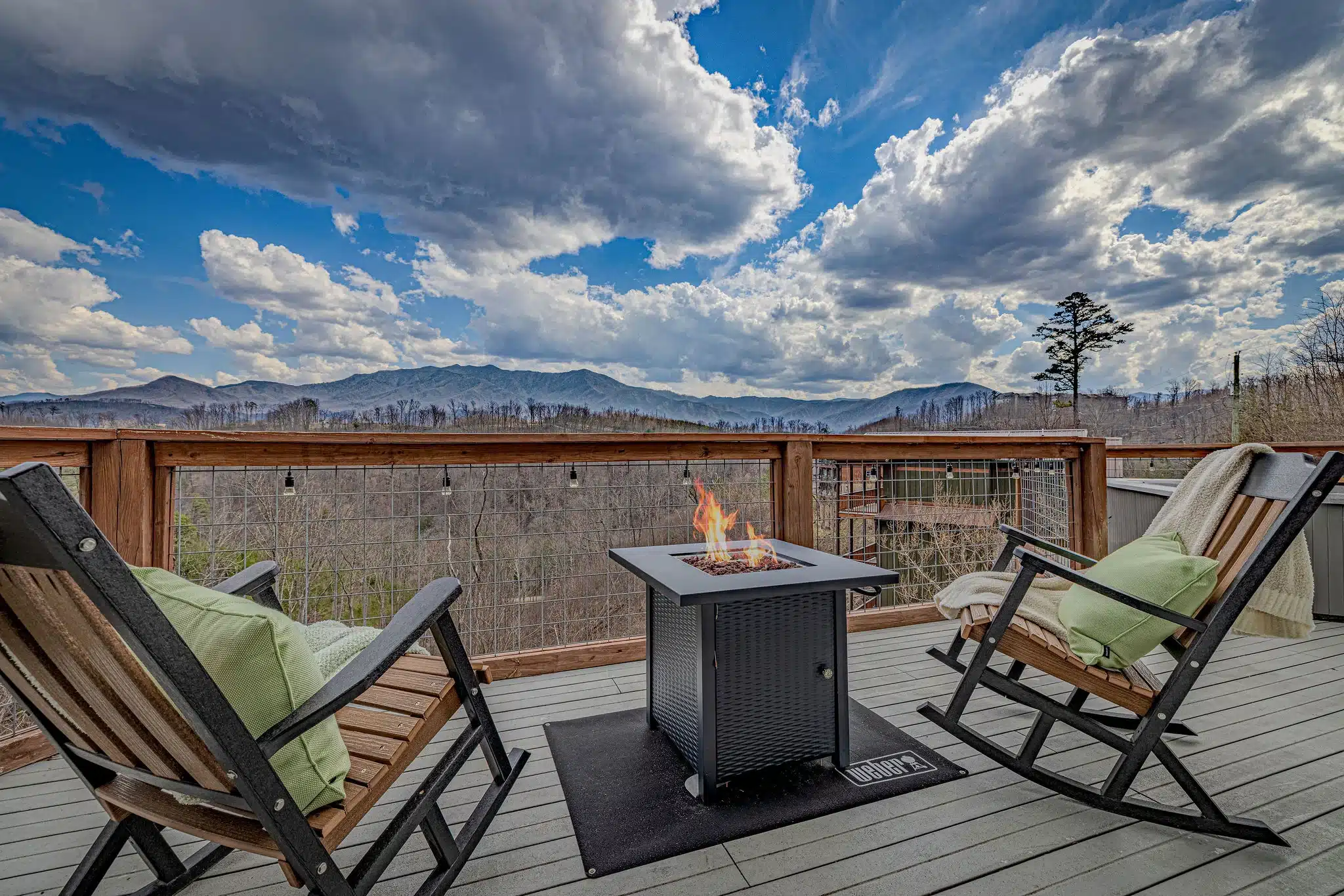
If a quiet, view-first base camp for the routes in this guide sounds right, Summit View Lodge is perched above Gatlinburg in Chalet Village North, three miles from downtown and close enough to Roaring Fork and the arts and crafts loop to make an early start easy. The fire pit and hot tub on the deck are a good place to land after a morning spent avoiding the crowds. Check availability at Summit View Lodge.