
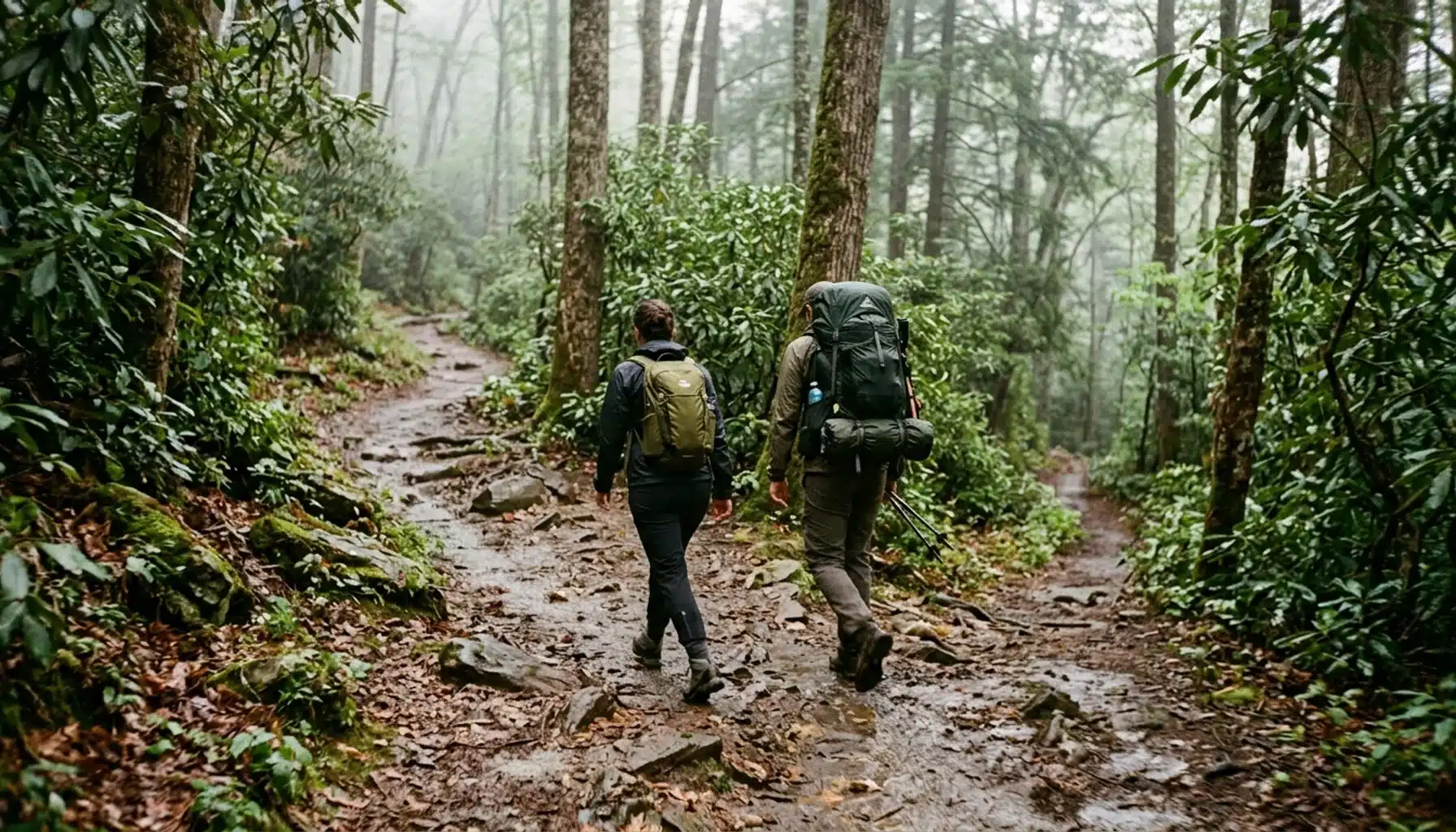
Hiking vs trekking comes down to time, terrain, and self-sufficiency. A hike is typically a day outing on a marked trail that returns you to your starting point, while a trek is a multi-day journey, often through remote country, with nights in tents, huts, or shelters. In the Smokies, Laurel Falls is a hike; carrying a pack up to LeConte Lodge for the night edges toward a trek. Most first-time Gatlinburg visitors are happiest with day hikes from a comfortable cabin base such as Summit View Lodge.
Key Takeaways
- Duration: Hikes typically last 30 minutes to 3 hours and cover 10 miles or less, while treks usually run for days or weeks and cover 10 miles or more (Academy Sports + Outdoors).
- No official line: The two words overlap, and some sources call multi-day outings hikes, so route length, nights out, and remoteness matter more than the label.
- Difficulty: Trekking is usually harder because it stacks several days of effort with a heavier pack, but a steep day hike can be tougher than an easy hut-supported trek.
- Beginners near Gatlinburg: Start with short waterfall routes such as Laurel Falls and Grotto Falls, each roughly 2.6 miles round trip.
- Trekking in the Smokies: Overnight options include LeConte Lodge, which is reachable only on foot, and backcountry routes that need a permit; confirm current rules with the National Park Service.
- Base camp: Summit View Lodge sits 4 miles from the national park entrance and has a single-level layout, a private hot tub, and two king ensuite bedrooms for recovery after trail days.
Searchers asking about hiking vs trekking in 2026 usually want one of two answers: what the words mean, or which one to plan for a real trip. Great Smoky Mountains National Park received approximately 12.2 million visitors in 2026, according to the National Park Service, so trail choice and timing matter as much as definitions.
We host guests at Summit View Lodge, a two-bedroom cabin above Gatlinburg in Chalet Village North, and the hiking questions we hear most concern difficulty and gear. A trek needs far more planning than a morning on a waterfall trail, and the Smokies reward both styles in different ways.
Below you will find a side-by-side comparison, a decision framework built on measurable route details, beginner trails near Gatlinburg, and a plain-language safety section. Competing guides rely on broad labels like “strenuous,” so this one focuses on numbers you can check.
What Is the Difference Between Hiking and Trekking?
Hiking is a walk on a natural trail, typically finished in a day, while trekking is a multi-day journey on foot that often crosses remote terrain and includes overnight stays. Academy Sports + Outdoors puts typical hikes at 30 minutes to 3 hours and 10 miles or less. It describes treks as lasting days or weeks and usually covering 10 miles or more.
The far end of trekking is much longer. Thule says treks can last from one week to several weeks and cover anywhere from 50 to 1,000 km (30 to 600 mi). Academy also notes that hiking routes tend to be well marked and accessible, while trekking paths may be unmarked and take extensive travel to reach.
| Factor | Hiking | Trekking |
|---|---|---|
| Typical duration | 30 minutes to a full day, usually back by evening | Several days to several weeks |
| Typical distance | About 10 miles or less (Academy) | 10 miles or more; some routes span 30 to 600 miles (Thule) |
| Overnight stays | Usually none | Tents, huts, or remote shelters |
| Trail marking | Usually marked and easy to reach | May be unmarked or remote |
| Gear | Daypack, water, layers, food | Adds sleeping bag, extra food, water purification, poles, headlamp, first-aid kit (BUFF) |
| Smokies example | Laurel Falls, Grotto Falls, Cataract Falls | Overnight at LeConte Lodge or a permitted backcountry route |
One caution on the table: these ranges are conventions, not rules. Treat each row as a typical pattern rather than a test a route must pass.
Is a Trek the Same as a Hike?
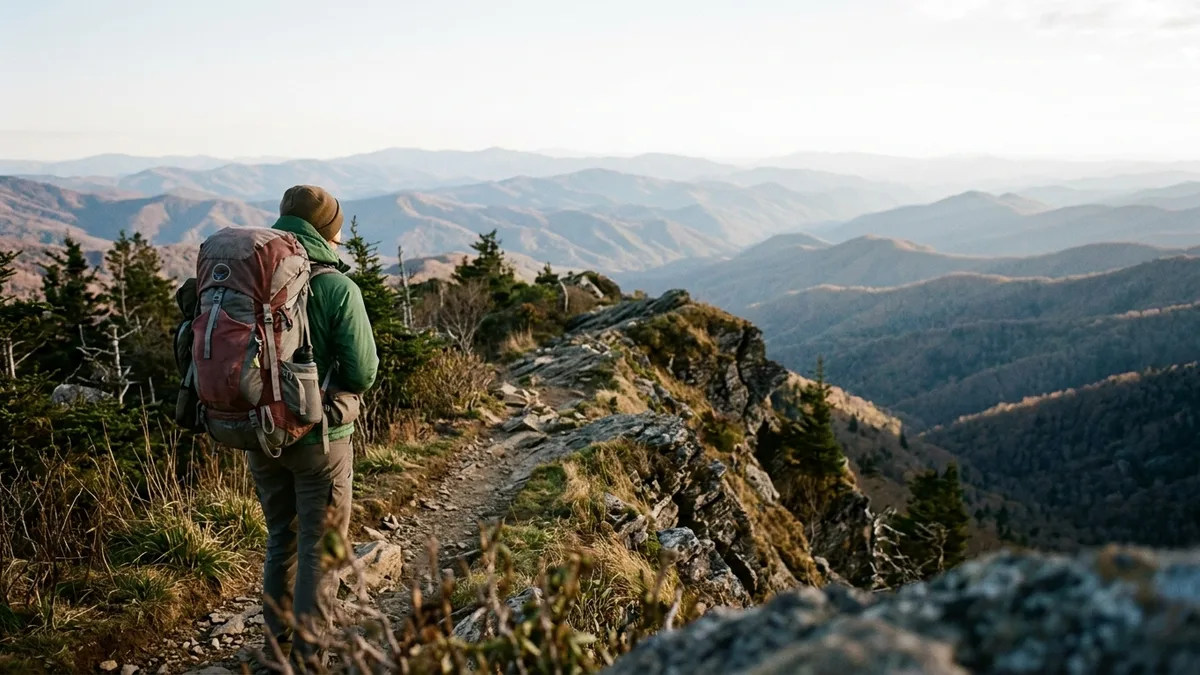
A trek is not a strict synonym for a hike, but the two words overlap heavily and no governing body sets an official boundary. Much Better Adventures, citing the Oxford English Dictionary, quotes hiking as “the activity of going for long walks, especially across country” and trekking as “to go on a long arduous journey, typically on foot.”
Sources disagree on the edges. Pelican notes that hiking can be single-day or multi-day, while Salomon describes trekking as a multi-day mountain hike that can be a loop or a traverse. Salomon also says altitude does not define a trek, even though high mountains are the usual association.
Named routes make the idea concrete. T3 lists the Everest Base Camp trek, the Inca Trail, and New Zealand hut routes as traditional treks, and Intrepid Travel points to Torres del Paine in Patagonia and Mount Toubkal in the High Atlas Mountains. The same sources treat Yosemite as classic hiking country.
Regional habits shift the vocabulary as well. In the United States, many people say “backpacking” for a multi-day trip carrying all your gear, which is close to what other countries call trekking. If a Gatlinburg outfitter or guidebook uses either word, ask about nights out and miles per day to learn what is really on offer.
Hiking vs Trekking: Which One Fits Your Gatlinburg Trip?
Choosing between hiking vs trekking means weighing four practical factors: nights on the route, distance from help, how much you carry, and how much navigation the route demands. No single factor makes something a trek, so score your trip on all four before you commit to gear or permits.
- Count the nights. Zero nights out is a hike. One night at a lodge or campsite is an overnight hike, and three or more nights usually earns the word trek.
- Check remoteness and marking. Ask whether the route is signed, how far it is to a road, and whether phone coverage exists.
- Decide supported or self-supported. Huts and lodges that provide beds and meals mean a lighter pack than carrying a tent and stove.
- Measure the route. Write down distance, elevation gain, highest altitude, and expected hours per day, then compare them with your longest recent outing.
Choose hiking if
Hiking suits you if you want a hot shower and a real bed each night. The upside is flexibility: you can turn around at a waterfall, skip a trail when storms roll in, and change plans over breakfast. In the Smokies that means you can swap Alum Cave for Laurel Falls when clouds sit on the ridge. The downside is crowds. Laurel Falls and Grotto Falls parking fills by mid-morning in peak season, and cars line the road shoulder.
Choose trekking if
Trekking suits you if distance, solitude, and a sense of travel are the point. The upside is depth: you reach ridgeline terrain along the Appalachian Trail that day hikers never see, and you wake up above the clouds. The downside is cost, planning, and a heavier pack. Exits are also scarce. If a storm hits the high ridge or someone twists an ankle, the nearest road may be many miles away.
Hikers who base themselves at this single-level Chalet Village North cabin get a third option: several different day hikes with the same comfortable bed waiting each night. Our hiking near Gatlinburg trail guide covers routes by difficulty.
Which Is Harder, Trekking or Hiking?
Trekking is usually harder than hiking because it stacks multiple days of effort, a heavier pack, and fewer exits, but difficulty depends on measurable route data rather than the label. A steep 11-mile day hike can be tougher than an easy hut-to-hut trek with a light pack and short daily stages.
Use five numbers to judge any route: total distance, elevation gain, highest altitude, terrain type, and expected hours per day. Distance alone misleads. Two 5-mile trails can differ by thousands of feet of climbing, and a rocky descent can be slower than a gentle ascent.
A Smokies example shows the gap. Mount LeConte via Alum Cave Trail is roughly 11 miles round trip with around 2,700 feet of elevation gain, which makes it a demanding day hike. Confirm current figures and trail conditions on the Great Smoky Mountains National Park website before you go.
Is trekking harder than hiking for beginners?
Yes, for most beginners. A first trek asks you to carry sleeping and food gear, manage blisters across consecutive days, and make navigation decisions with less margin for error. BUFF also notes that some high-altitude treks require acclimatization or basic technical skills. Build up with two or three day hikes of increasing length first, then try a single overnight with lodge support.
What Are the Best Beginner Hiking Trails Near Gatlinburg?
The best beginner hiking trails near Gatlinburg are short, well-worn routes to a waterfall, such as Laurel Falls, Grotto Falls, and Cataract Falls, each finishable in a few hours without overnight gear. All three sit inside Great Smoky Mountains National Park, and a cabin at Chalet Village North puts the park entrance about 4 miles away. Mileages below are approximate, so check the National Park Service page for current trail details.
Laurel Falls follows a paved path for roughly 2.6 miles round trip. It is the park’s most crowded waterfall hike, with steep drop-offs beside the pavement, so go early on a weekday and keep small children close.
Grotto Falls is also roughly 2.6 miles round trip, and the trail lets you walk behind the waterfall. The trailhead sits on the Roaring Fork Motor Nature Trail, which closes seasonally, so check road status before you drive over.
Cataract Falls is about a mile round trip near the Sugarlands Visitor Center. It is the easiest of the three and works for toddlers and grandparents, though the falls are modest compared with the other two.
Guests staying at Summit View Lodge are 3 miles from downtown Gatlinburg and 4 miles from the park entrance. That makes a 7 a.m. start realistic, which is the best defense against trailhead crowds in summer and during the fall color weeks. If you are traveling alone, our solo travel Gatlinburg guide covers which trails feel comfortable on your own.
Can You Trek in the Smoky Mountains, and Can You Book a Guide?
Trekking in the Smoky Mountains means linking trails into an overnight or multi-day route inside Great Smoky Mountains National Park, usually with a backcountry permit or a reservation at LeConte Lodge. The park has no hut network like the Alps or Nepal, so most multi-day trips are either lodge-supported or fully self-supported.
LeConte Lodge is the park’s only lodge and is reachable only on foot, which makes it a supported overnight hike: you carry clothes and snacks rather than a tent and stove. The Appalachian Trail also crosses the park along the high ridgeline, roughly 70 miles within its boundaries. Our Appalachian Trail map guide shows how sections connect to roads near Gatlinburg.
Overnight backcountry camping in the park requires a permit, and rules change periodically. Verify requirements, fees, and campsite availability with the National Park Service before you plan dates.
Can you book a guided Smoky Mountains hike from Gatlinburg?
Yes. Guided hikes leave from Gatlinburg and the surrounding area. Guides operating inside the park need National Park Service authorization, so ask any guide to confirm theirs before you pay. A guide is most useful for first overnight trips and waterfall hikes with young children. Guides also help if you want trail interpretation rather than a map and a phone.
What Gear Changes Between a Day Hike and a Multi-Day Trek?
Day hike gear is a daypack with water, extra layers, food, and a charged phone, while multi-day trek gear adds sleeping, cooking, water treatment, and emergency systems. BUFF lists a trekking loadout of layered clothing, a sleeping bag, extra food, water-purification tools, trekking poles, a headlamp, and a first-aid kit.
Support changes the list. T3 notes that routes with water stops, food, and overnight lodges, huts, or bunkhouses let trekkers carry less than on unsupported routes. Staying at LeConte Lodge, for example, means no tent or stove, though you still need a rain jacket, warm layers, and a headlamp.
Smokies weather shifts with elevation, so a dry, warm morning in Gatlinburg can become cold and wet on a ridge. Pack a rain shell even for short hikes, and carry more water than the trail length suggests on warm days.
Is Hiking or Trekking Safe for Everyone?
Hiking is safe for most people who match the route to their fitness, while trekking carries more risk because help is farther away and conditions can change over several days. A few plain-language checks reduce most problems before you leave the cabin.
Physical Fitness Level: Judge a trail by elevation gain and hours, not just miles. If you walk 3 miles comfortably, pick routes near that distance with gentle climbing before you try anything long.
Altitude and Weather: Clingmans Dome rises above 6,600 feet, so temperatures can be much colder and storms arrive faster than in town. Our Clingmans Dome to Gatlinburg drive guide covers timing. Check the forecast the night before and turn around if lightning is near.
Bears and Wildlife: Black bears live throughout the park. Keep a wide distance, never feed wildlife, and store food properly; our Gatlinburg bear safety guide has the details.
Water and Hydration: Carry enough water for the whole outing, and treat any stream water you use on multi-day trips.
Who Should Check with a Doctor First: Talk to your doctor before a demanding hike if you have heart or breathing conditions, are pregnant, or take medication that affects balance or hydration.
Winter Driving: Snow and ice can affect mountain roads and trailheads. AWD or 4WD is recommended for the cabin road in winter, and some park roads close seasonally.
Where Should You Stay Between Day Hikes?
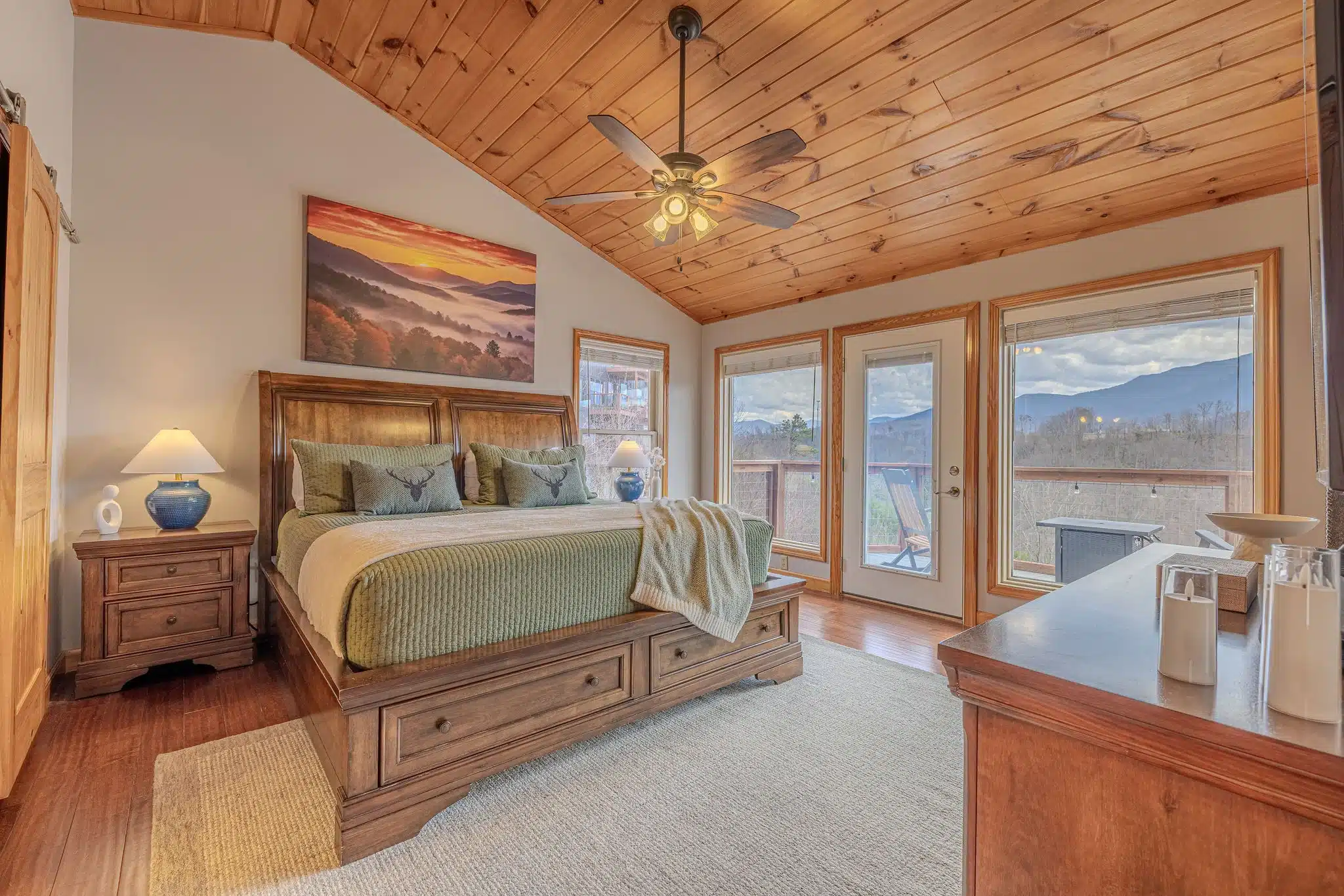
A good hiking base is a cabin close to the park entrance with a comfortable bed, a kitchen, and a place to recover. Summit View Lodge is a two-bedroom cabin in Chalet Village North that sleeps up to five, with two king bedrooms, each with an ensuite bathroom, plus a sleeper sofa.
The practical details matter after a long trail day. The cabin is single-level with no interior stairs, which helps tired knees. The kitchen is fully equipped, so you can cook breakfast before a 7 a.m. start, and an in-unit washer and dryer handle muddy gear. Free parking covers two cars.
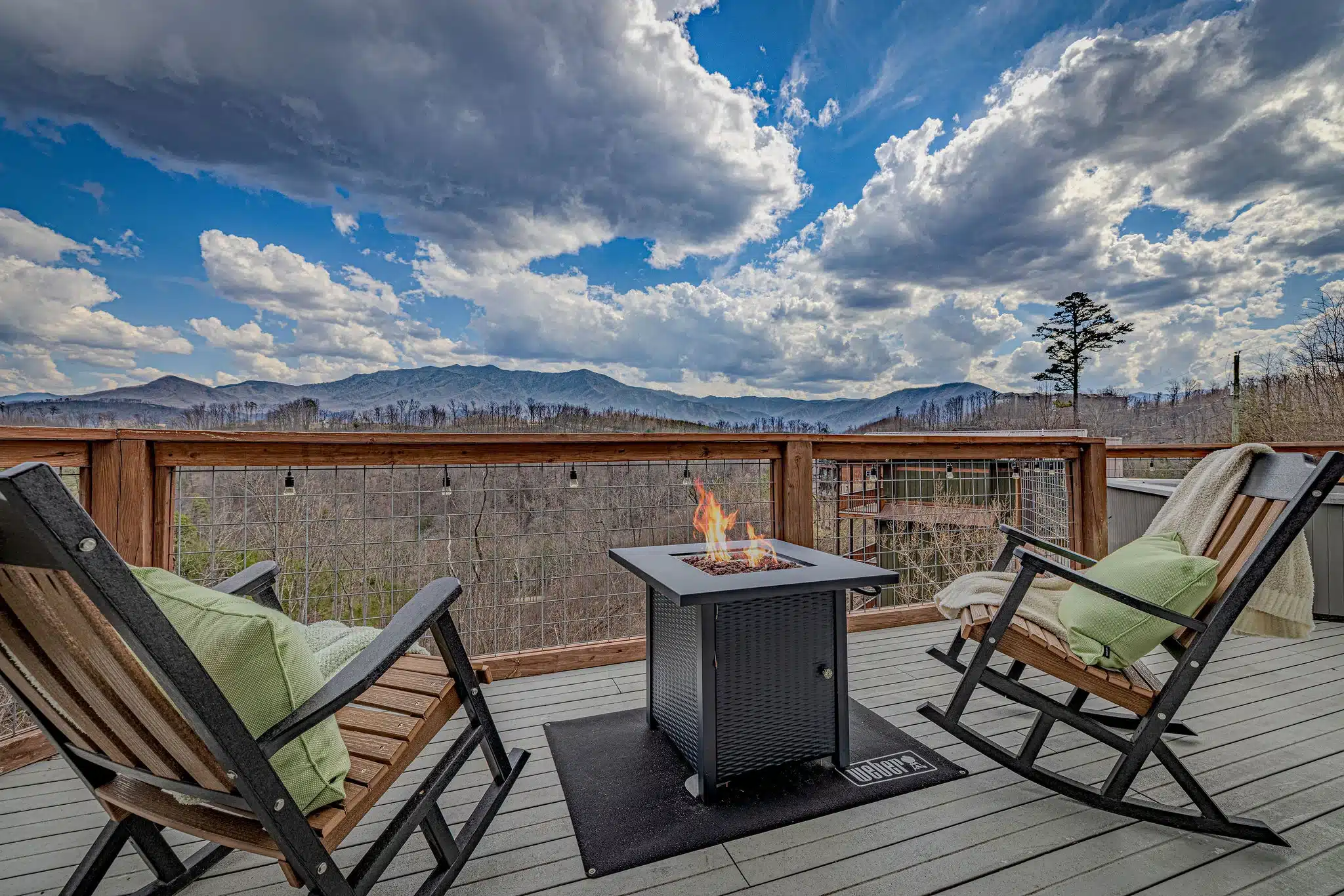
Evenings revolve around the deck: a private hot tub, a fire pit, rocking chairs, and a view toward Mt. LeConte, the mountain you may have hiked that day. Inside, a gas fireplace sits beneath cathedral ceilings. Seasonal access to the three Chalet Village pools runs roughly May through September.
Location numbers are simple: 3 miles to downtown Gatlinburg, 4 miles to the park entrance, and 0.7 miles to Ober Gatlinburg, a good rest-day outing. Dollywood is 12 miles away if some in your group would rather skip the trail; see the Dollywood website for hours. For quieter lodging options, see our guide on where to stay in Gatlinburg for a quiet retreat.
Frequently Asked Questions
What is the difference between hiking and trekking?
Hiking is typically a day outing on a marked trail that returns to the starting point, while trekking is a multi-day journey, often through remote terrain, with overnight stays. Academy Sports + Outdoors puts hikes at 30 minutes to 3 hours and 10 miles or less, and treks at days or weeks and usually 10 miles or more.
Is trekking harder than hiking for beginners?
Usually yes. Trekking adds consecutive days of effort, a heavier pack, and fewer exits. Beginners should build up with day hikes of increasing distance and elevation gain, then try a single supported overnight before planning a longer trek.
Can I book a guided Smoky Mountains hike from Gatlinburg?
Yes, guided hikes depart from Gatlinburg and nearby areas. Guides working inside Great Smoky Mountains National Park need National Park Service authorization, so ask any provider to confirm theirs before booking.
Where is a good place to stay for hiking near Gatlinburg?
Summit View Lodge is a single-level, two-bedroom cabin in Chalet Village North that sleeps up to five, with two king ensuite bedrooms, a private hot tub, and a fire pit. It sits 4 miles from the national park entrance and 3 miles from downtown Gatlinburg. Compare any cabin on drive time to the park and winter road access.
Do I need a permit to camp overnight in the Smokies?
Overnight backcountry camping in Great Smoky Mountains National Park requires a permit. Requirements and fees change, so confirm current rules with the National Park Service before choosing dates.
What is the best time of year to hike near Gatlinburg?
Spring and fall are popular for mild temperatures, wildflowers, and fall color, while summer brings crowds and afternoon storms. Winter hiking is quieter but can mean ice and seasonal road closures. In winter, AWD or 4WD is recommended for the road to Summit View Lodge.
Conclusion
The hiking vs trekking question has a practical answer: count your nights on the trail, measure distance and elevation, and decide how much support you want. Day hikes such as Laurel Falls and Grotto Falls fit most Gatlinburg trips, while an overnight at LeConte Lodge or a permitted backcountry route is the trekking-style step up. The terms overlap, so rely on numbers rather than labels.
In 2026 the Smokies remain busy, so early starts and a base within a few miles of the park entrance make either style easier. Match your route to your fitness, check current conditions on the National Park Service website, and build up gradually.
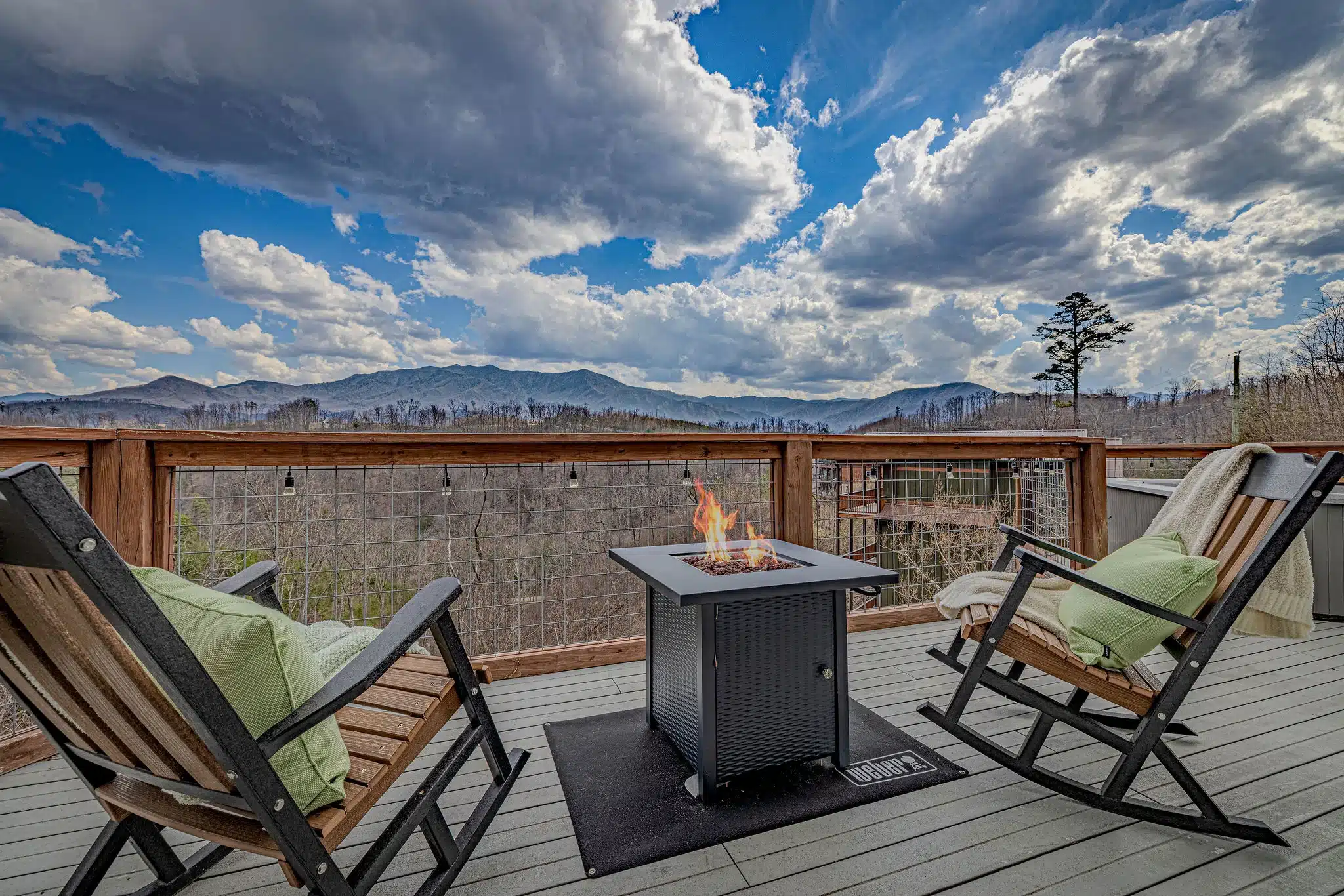
If your plan is day hikes followed by a soak, Summit View Lodge puts you 4 miles from the park entrance, with a private hot tub on a deck facing Mt. LeConte. Check availability here.